



This checklist walks you through link building in the order it actually needs to happen — starting with your audit, then your goals, then the tactics, then vetting, outreach, and tracking. Follow it in sequence and you’ll spend your time and budget on the links that actually move rankings.
Quick answer: A complete link building checklist covers six phases in this order:
- Audit your current backlink profile and your competitors’
- Set goals and estimate how many links you actually need
- Choose tactics that fit your site (guest posts, niche edits, digital PR, HARO, resource pages, broken link building, unlinked mentions)
- Vet every prospect for relevance and authority before you pitch
- Run outreach with a clear, personalized ask
- Track results against the goal you set, not just link count
What Is a Link Building Checklist (and Why Sequence Matters)
A link building checklist is an ordered list of the steps needed to run a link acquisition campaign — not just a list of tactics you could try. That distinction matters more than it sounds.
A tactic list tells you what’s possible (guest posts, HARO, broken link building, and dozens of other options). A checklist tells you what to do first. Skip the audit and you might build links to a page that’s already broken or redirected. Skip goal-setting and you might spend a $10,000 budget on volume when you needed authority instead. The steps below are ordered the way a real campaign should run.
Step 1–2: Audit Your Backlink Profile and Your Competitors’
Before building a single new link, find out where you actually stand. This step tells you what’s working, what’s dragging your profile down, and what your competitors are doing that you aren’t.
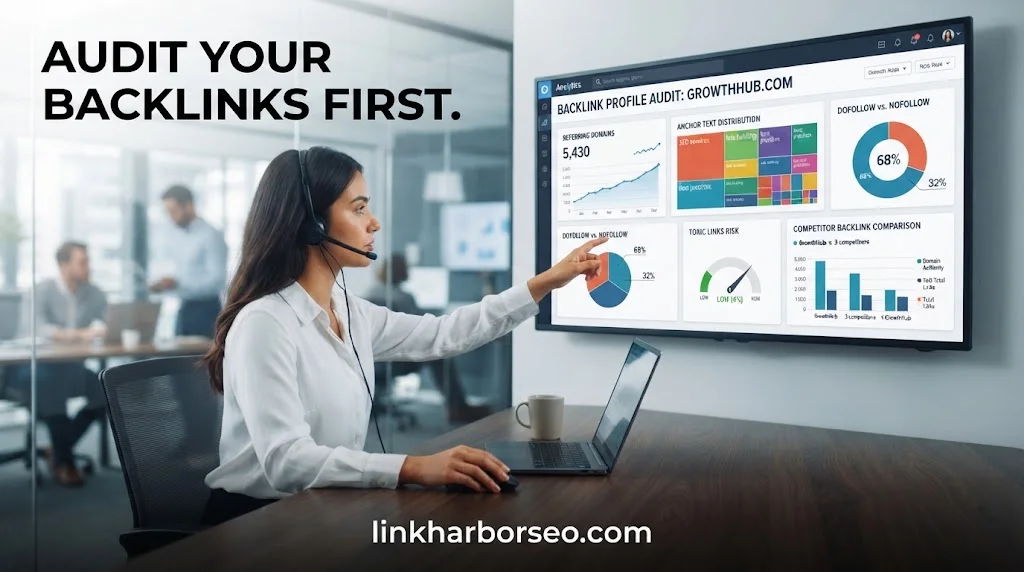
Audit Your Own Backlinks
Pull your current backlink data from Google Search Console (free) or a paid tool like Ahrefs or Semrush, and check:
- Referring domains and link velocity — how many unique sites link to you, and whether that number is growing steadily or in unnatural spikes
- Anchor text distribution — a healthy profile is mostly branded and naked-URL anchors, with only a modest share of exact-match keyword anchors
- Dofollow vs. nofollow ratio — a profile that’s 100% dofollow can look manipulated; some nofollow, UGC, and sponsored links are normal and expected
- Toxic or spammy links — sites with no real traffic, unrelated topics, or gambling/adult anchor text nearby are candidates for Google’s Disavow Tool
Analyze Competitor Backlinks
Once you know your own baseline, reverse-engineer the pages already ranking for your target keywords. Look at their referring domain count, where their links point (homepage vs. inner pages), and which of their content pieces attract the most links naturally. This is also where you run a link gap analysis — finding sites that link to your competitors but not to you. A site linking to two or three competitors already is usually open to linking to you too; you just have to ask.
Step 3–4: Set Goals and Estimate How Many Links You Need
A checklist without a goal just turns into busywork. Before you build anything, decide what the campaign is actually for.
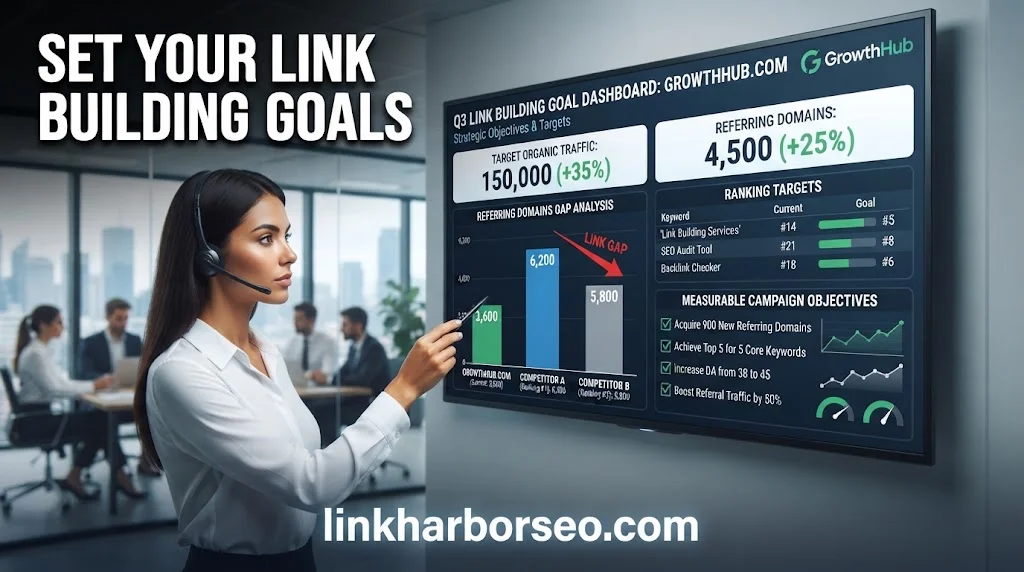
Tie your goal to a business outcome, not a link count — “increase organic traffic to this page by 15%” or “close the referring-domain gap with our top competitor by 30,” not “build 50 backlinks.” The second kind of goal tells you nothing about whether the campaign worked.
To estimate volume, look at the referring domains pointing to the pages currently ranking for your target keyword. If the top three results average 300+ referring domains and you have 40, that gap is your rough target — though quality and relevance matter more than closing the gap link-for-link.
How Much Does Link Building Cost?
Costs vary enormously by link type and quality, but a few figures give a useful anchor point. A 2026 report on link building statistics found that nearly 54% of marketers spend over $300 to acquire a single high-quality backlink, with the most common price range falling between $400 and $600, and an average cost per quality link of about $509. The same data found the average minimum monthly budget for link building in competitive niches runs around $8,400.
Type of link changes the price sharply. Digital PR placements in genuine outlets tend to sit at the higher end, while HARO responses and broken link building can cost little beyond your own time. If you’re outsourcing, expect agency pricing to reflect the same range plus a management fee — treat any offer of “500 backlinks for $99” as an immediate red flag, not a bargain.
Step 5–9: Choose the Right Link Building Tactics
Not every tactic fits every site. The seven below cover the methods that consistently produce real, ranking-relevant links in 2026 — chosen based on how they’re used, not just how many exist.
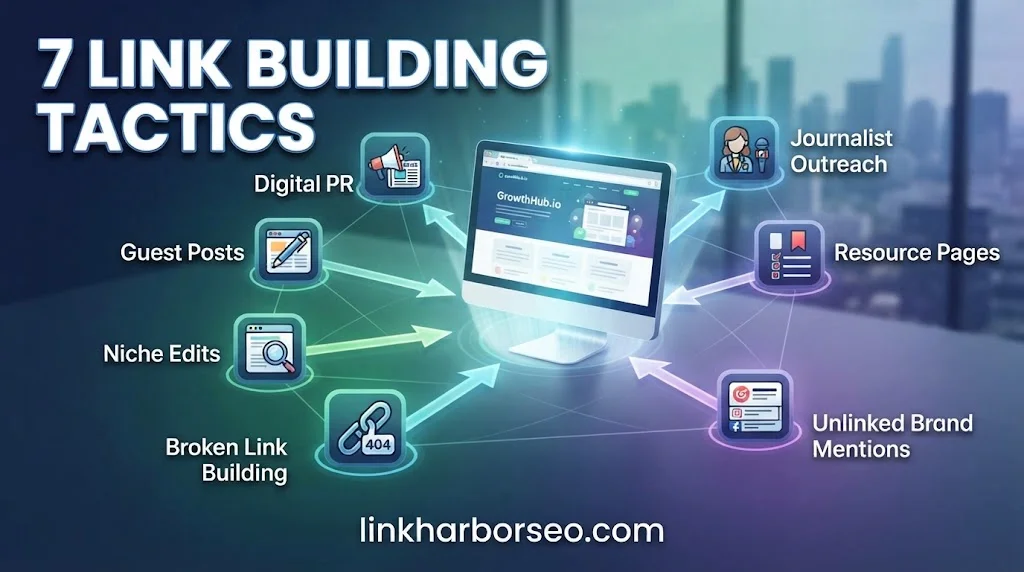
| Tactic | Best For | Typical Effort | Typical Cost/Risk |
|---|---|---|---|
| Guest posts | Scalable, relevant authority | Medium | Low risk if genuinely editorial; devalued if exchanged for payment on thin sites |
| Niche edits / link insertions | Quick authority from pages that already rank | Low–Medium | Moderate cost; look for genuine organic traffic on the host page |
| Digital PR | Trust and entity signals from major outlets | High | Higher cost, lowest risk, hardest to replicate |
| HARO / journalist outreach | Free, high-authority editorial links | Medium (ongoing) | Free but competitive and time-consuming |
| Broken link building | Reclaiming easy, low-cost wins | Medium | Low cost, requires manual prospecting |
| Resource pages | Fast wins from pages built to link out | Low | Low cost; supply matters more than persuasion |
| Unlinked brand mentions | Converting existing goodwill into links | Low | Low cost, highest reply rate of any outreach type |
Among these, digital PR consistently shows the strongest effectiveness in industry surveys, at roughly 48% compared to other tactics, with guest blogging and linkable-asset creation following behind. That doesn’t mean digital PR should be your only tactic — it means it deserves priority when your budget allows it, with the lower-cost tactics filling the gaps.
A common mistake: relying on a single tactic for the entire campaign, usually guest posts, because they’re the easiest to buy. A backlink profile built from one source alone looks unnatural to Google and leaves you exposed if that channel dries up or gets devalued.
Step 10: Vet Every Link Prospect Before You Pitch
Not every link is worth having, and a handful of bad ones can do more damage than a lack of links at all.
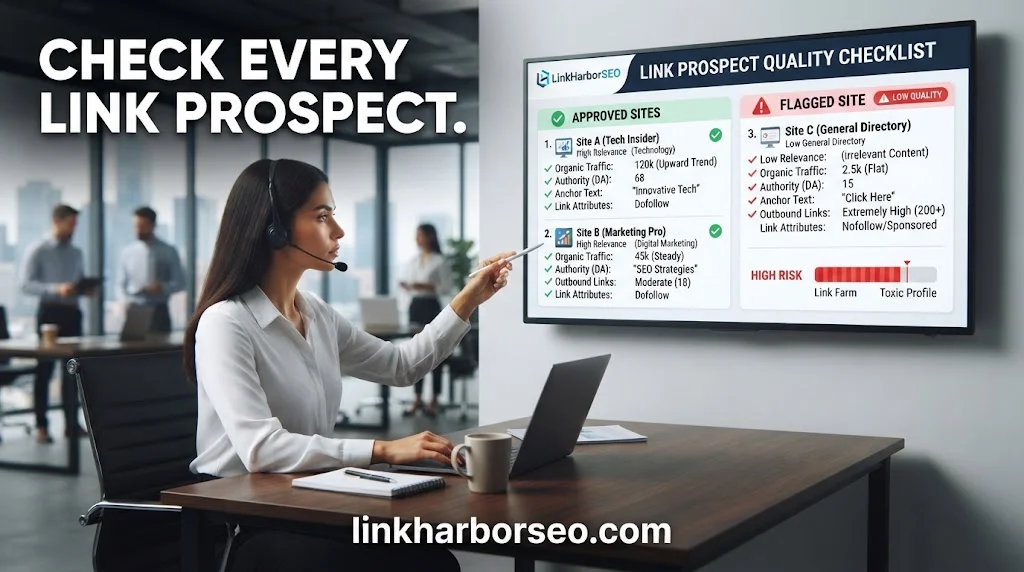
Before reaching out to any site, check:
- Relevance — does the page cover a related topic, audience, and (where it matters) location? In one industry survey of SEO practitioners, relevance was cited as the single most important criterion for judging backlink quality, ahead of raw authority scores. editorial
- Organic traffic — a site with high authority metrics but no real visitors is a warning sign, not a win.
- Anchor text and outbound link ratio — sites with spammy anchor text nearby (gambling, pharmaceuticals, adult content) or an unusually high number of outbound links relative to their authority may be selling links outright.
- Link attributes — dofollow links pass the most value, but nofollow, sponsored, and UGC links from genuinely authoritative sites still bring traffic and visibility, and are not worthless.
A quick way to spot a link farm: thin content spread across unrelated industries (SaaS, real estate, health, and automotive all on the same low-effort site) is one of the clearest signs a site exists only to sell links.
If You’re Hiring a Link Building Agency: Red Flags to Watch For
The same vetting logic applies to agencies. Be cautious of any provider that:

- Guarantees a specific ranking position (no one controls Google’s algorithm)
- Sells links in bulk packages priced far below the market ranges above
- Can’t show you the actual sites they’ll place links on before you pay
- Won’t explain their vetting process for relevance and traffic
Step 11–12: Run Outreach and Track Your Results
Finding the right prospect is half the work. Getting the link — and knowing whether it helped — is the other half.

Outreach Basics
Keep outreach emails short, personalized, and focused on one clear ask. Reference something specific about the recipient’s content, explain briefly why your resource fits, and make the next step easy. Avoid generic templates sent at scale with no personalization — they get ignored or reported as spam, and repeated cold-email volume without proper sender authentication (SPF, DKIM, DMARC records) can hurt your domain’s deliverability for legitimate email too.
Also worth knowing: paying directly for links violates Google’s guidelines on link schemes, even though it remains common practice. That doesn’t mean every paid placement is risky — sponsored and nofollow attributes exist precisely so sites can disclose paid content without passing manipulative ranking signals. The risk comes from undisclosed paid links dressed up as editorial ones.
Track and Measure What Matters
Go back to the goal you set in Step 3 and measure against it, not against link count alone:
- New and lost referring domains month over month
- Keyword ranking movement for your target pages
- Organic traffic to the pages you built links to
- ROI relative to your original goal — did the traffic or ranking change justify the spend?
Set up free alerts (Google Alerts for brand mentions, Search Console for new/lost links) so you catch both new opportunities and lost links without manually checking every week.
FAQ
What are some effective methods for link building?
The tactics with the strongest track record are digital PR, guest posting, HARO/journalist outreach, broken link building, niche edits, resource page outreach, and reclaiming unlinked brand mentions. Digital PR tends to produce the most authoritative results, but a mix of tactics builds a more natural, resilient profile than relying on just one.
What are the most effective link building strategies for 2026?
The strategies gaining the most traction are digital PR tied to newsworthy content, reclaiming unlinked brand mentions (since the mention already exists, you’re just asking for a link), and creating genuinely useful linkable assets like original research or free tools that earn links without outreach.
How much does link building cost?
Costs vary by tactic and quality, but a commonly cited average sits around $500 per high-quality backlink, with monthly budgets for competitive niches often starting around $8,000. Guest posts and niche edits tend to run cheaper; digital PR placements in major outlets run higher.
What is a link building service?
A link building service is an agency or freelancer that handles backlink acquisition on your behalf — typically through guest posting, digital PR, or niche edits — usually billed per link or as a monthly retainer. It’s worth considering if you lack the time for consistent outreach, but vet any provider the same way you’d vet a link prospect: check their process, ask for site examples before paying, and be wary of guarantees.
Conclusion
A link building checklist only works if you follow it in order — auditing and goal-setting have to come before outreach, not after. If you’re starting from scratch, the best place to begin is Step 1: run a free backlink audit through Google Search Console today, even before you touch outreach or budget planning.

3 comments on “Link Building Checklist: 12 Steps to Earn Quality Backlinks in 2026”