


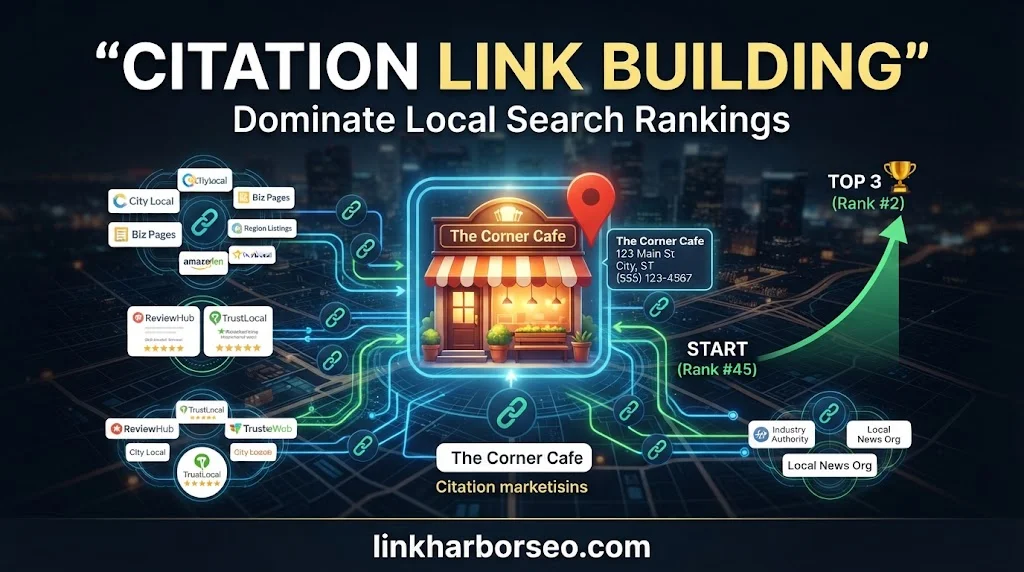
Want more calls, more foot traffic, and a stronger spot in the local map pack? Citation link building is one of the fastest ways to get there. It’s cheap, it’s proven, and most US businesses still get it wrong.
This guide breaks down 15 expert citation link building tips that actually move the needle in 2026 — including a few tactics most guides skip entirely, like AI citation visibility and schema markup. Let’s dig in.
What Is Citation Link Building in Local SEO?
A local citation is any online mention of your business name, address, and phone number — known as NAP — on a website, directory, or platform. Some citations include a clickable link back to your site. Others don’t. Both still count.
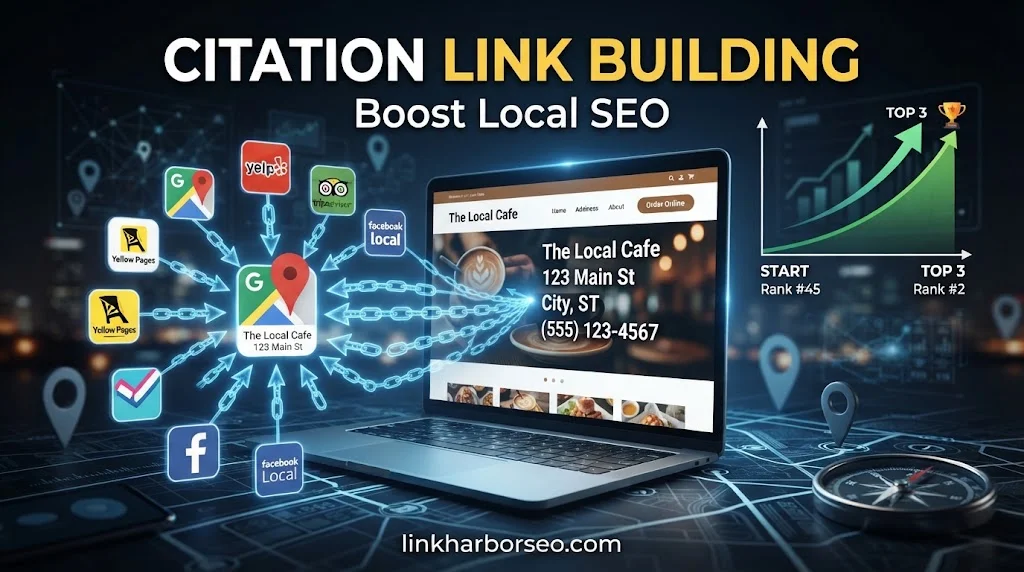
Here’s the distinction that trips people up: a structured citation is a full business listing on a directory like Yelp or Bing Places, with your NAP sitting in dedicated fields. An unstructured citation is looser — a mention of your business inside a blog post, news article, or “best of” roundup, often without any formal listing format at all.
Is a citation a link? Not always. A citation can exist without a hyperlink. But when it does include one, it becomes a local SEO citation that carries both trust signals and, in some cases, direct link equity.
Google confirmed years ago that consistent NAP data across the web helps it verify a business is real and active. That verification step matters more now than ever, because AI Overviews, Perplexity, and Copilot pull from the same trust signals when deciding which businesses to recommend. A messy citation profile doesn’t just confuse customers — it confuses the algorithms deciding who gets found.
15 Expert Citation Link Building Tips for Local Search Rankings
These tips cover the fundamentals every local business needs, plus a few advanced tactics that most citation building guides leave out entirely.

Run a Citation Audit First
Before building anything new, find out what already exists. Search your business name plus city across Google, and check tools that scan for existing listings. You’re looking for duplicates, outdated addresses, and old phone numbers still floating around the web.
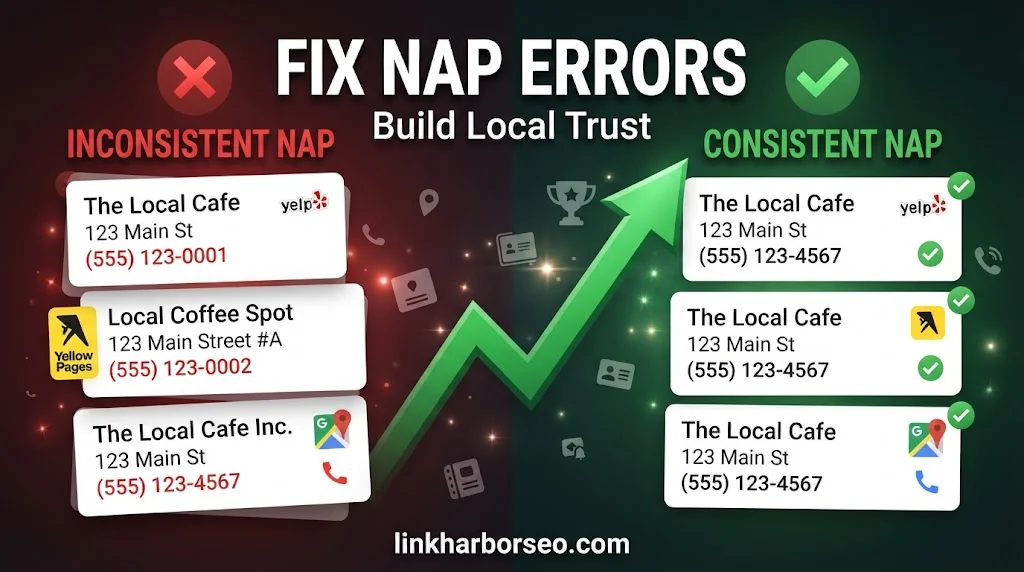
Fix NAP Inconsistencies Before Anything Else
Inconsistent NAP data is the single biggest citation killer. If your address reads “St.” on one directory and “Street” on another, that’s a mismatch. Clean these up before you build a single new listing — otherwise you’re stacking new citations on top of a shaky foundation.
Must Read: Link Building Checklist: 20 Expert Tips to Build Powerful Backlinks
Fully Optimize Google Business Profile, Bing Places, and Apple Maps
These three platforms carry the heaviest weight in local search. Fill out every field: hours, categories, service areas, photos, and a keyword-rich business description. A half-finished profile is a wasted opportunity.
Prioritize High-Authority General Directories First
Sites like Yelp, Better Business Bureau, and industry-agnostic directories with strong domain authority should come before anything niche. These general directory listings give Google an early, high-trust confirmation that your business exists.
Build Niche and Industry-Specific Citations
Once the big directories are covered, move into industry-specific ones. A roofing company benefits from roofing directories. A law firm benefits from legal directories like Avvo or Justia. These niche citations tell Google exactly what category you compete in.
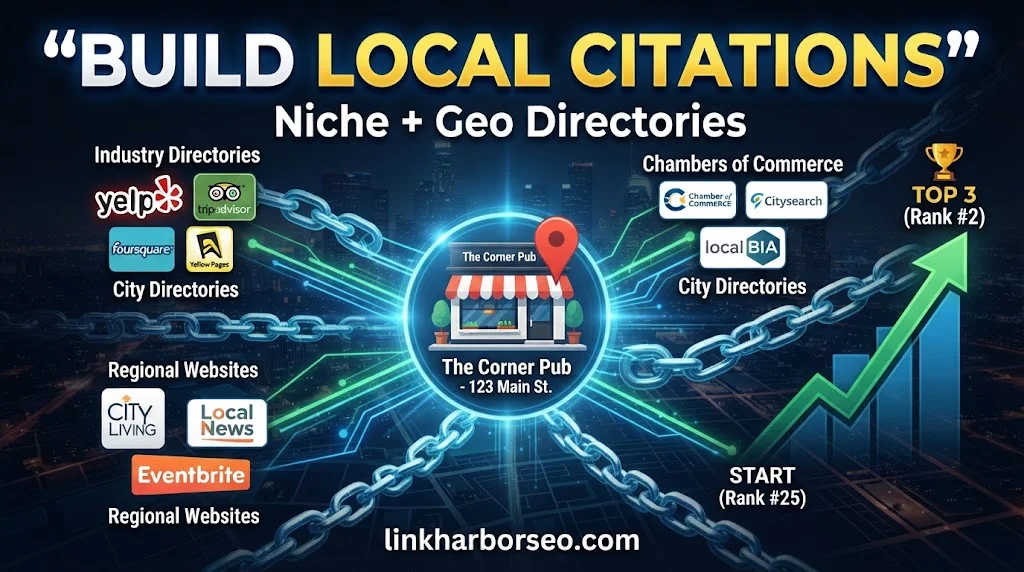
Target Geo-Specific Local Directories
City chambers of commerce, regional business associations, and local news sites all offer geo-targeted citation opportunities. These carry extra weight because they’re tied directly to your service area — a signal that’s hard to fake.
Check Whether Each Citation Is Dofollow or Nofollow
Many major directories, including some big names, tag their outbound links as “nofollow,” meaning Google doesn’t count them for ranking purposes. Right-click any listing, select “Inspect,” and search the page code for the nofollow tag. Dofollow citations pass link equity; nofollow ones still help customers find you, just not your rankings.
Use Local Keywords Naturally in Your Listings
Weave your city or neighborhood name into your business description where it fits naturally. Google uses anchor text and surrounding context to associate your listing with specific local search terms — so a plumber in Austin should actually say “Austin” somewhere in their profile copy.
Add Photos, Videos, and Logos to Every Listing
Rich media citations perform better. Listings with real photos get more clicks, more trust, and more engagement than bare-bones text entries. It’s a small effort with a noticeable payoff.
Add LocalBusiness Schema Markup to Your Website
This is a step almost every guide skips, but it matters. Schema markup is structured data that tells search engines exactly what your business name, address, phone number, and hours are — directly from your own site. It reinforces every external citation you’ve built and helps you show up in rich results and voice search answers.
Pursue Unstructured Citations Through Digital PR
Getting mentioned in a local news article, an industry roundup, or a “best of” listicle counts as an unstructured citation — and often carries more authority than a basic directory listing. Pitch local journalists, contribute expert commentary, or get featured in comparison articles relevant to your industry.
Run a Competitor Citation-Gap Analysis
Check where your top local competitors are listed that you aren’t. This reveals directories you’ve missed and shows you exactly where to focus your next round of citation building — instead of guessing.
Encourage Reviews and Social Mentions
Reviews on Google, Yelp, and Facebook function as informal citations. They reinforce your NAP data every time a customer leaves feedback, and they build the kind of social proof that both humans and algorithms trust.
Optimize for AI Citation Visibility
This is the newest frontier in citation link building.
AI answer engines like ChatGPT, Gemini, Perplexity, and Copilot generate responses by pulling from indexed web content — and they weigh independent editorial mentions and review sites far more heavily than basic directory entries. Strong citations on respected, third-party publications increase your odds of being the business an AI assistant actually recommends.
Set a Recurring Citation Audit Schedule
Citations decay. Directories get delisted, businesses move, phone numbers change. Set a calendar reminder every six months to re-check your listings, confirm they’re still indexed, and catch problems before they quietly hurt your rankings.
Common Citation Link Building Mistakes That Hurt Local Rankings
A few missteps show up again and again, even among businesses that mean well.
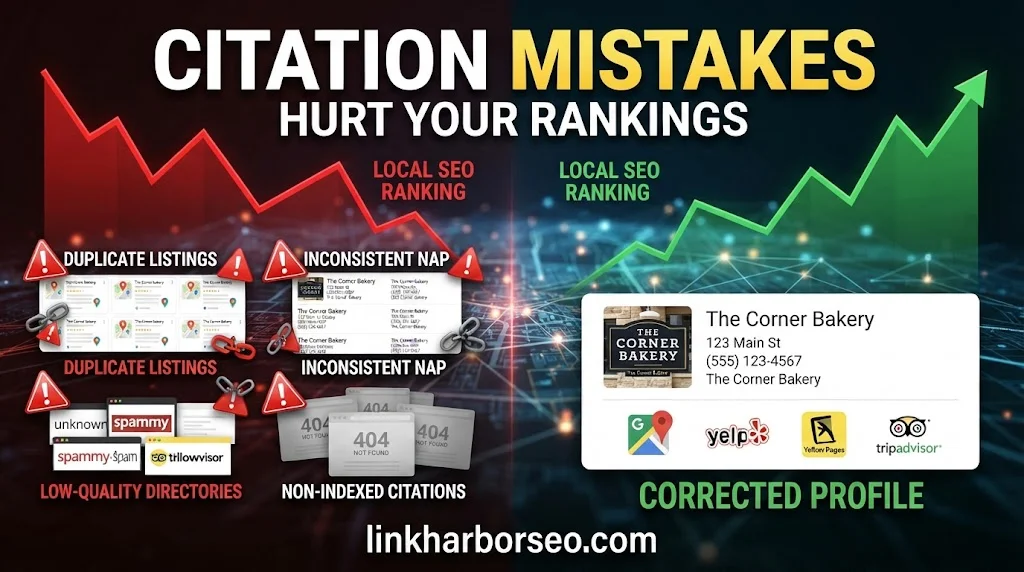
Duplicate Listings Split Your Authority
Two competing profiles for the same business dilute the trust signal Google would otherwise consolidate into one strong listing. Merge or remove duplicates as soon as you find them.
Chasing Volume Over Quality
Submitting to 200 low-value directories does less for you than 20 well-chosen, high-authority ones. Quality consistently outperforms quantity in citation link building.
Ignoring Indexing Status
A citation on a page Google hasn’t indexed carries almost no weight. Always confirm a directory page shows up in search before counting it as a win.
Letting NAP Drift Over Time
Moved offices, new phone numbers, and rebrands all create inconsistency if you forget to update every listing. This is the most common — and most avoidable — citation mistake.
Assuming Every Citation Is Worth the Same
A dofollow mention on a respected regional publication is worth more than a nofollow entry on an obscure directory nobody visits. Treat citations individually, not as a numbers game.
How to Measure the ROI of Your Citation Link Building Efforts
Tracking results keeps your local SEO citations strategy honest and focused.
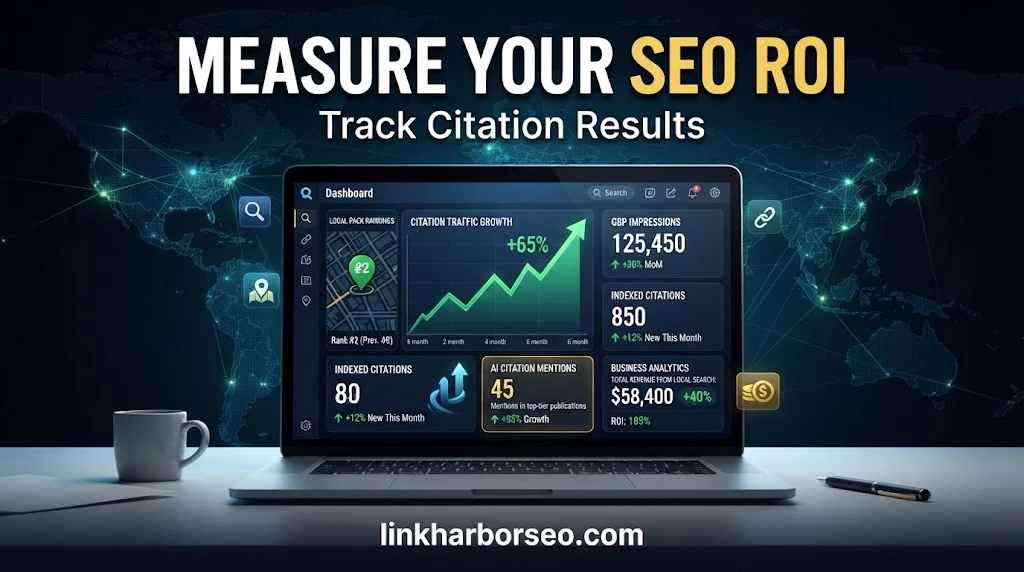
Watch Your Indexed vs. Non-Indexed Pages
Use a tool to check which directory listings are actually indexed by Google. Non-indexed pages don’t help you — treat them as maintenance items, not wins.
Monitor Local Pack Rankings
Track your position in Google’s local map pack for your target keywords over time. A well-executed citation campaign should correlate with gradual, steady movement — not overnight jumps.
Check Business Profile Impressions
Google Business Profile Insights shows how often your listing appears in search and maps. Rising impressions after a citation push is a strong sign the work is paying off.
Track AI Citation Mentions
Search your business name inside ChatGPT, Perplexity, and Gemini periodically. If you’re starting to show up in AI-generated answers, your editorial and review-site citations are doing their job.
FAQs
How do I create a citation from a link?
Add your business name, address, and phone number to any web page — a directory, blog, or news site — and include a hyperlink pointing back to your website. That combination of NAP data plus a link creates a citation with SEO value attached.
How do I put a link in a citation?
Most directories give you a dedicated “Website” field when you fill out your listing. Paste your URL there. For unstructured citations, like a mention on a blog, simply ask the site owner to hyperlink your business name to your site.
What is meant by link building?
Link building is the practice of getting other websites to link back to yours. It signals to search engines that other sites trust your content enough to reference it, which helps improve your rankings and visibility.
Is a citation a link?
Not always. A citation is any mention of your business, with or without a clickable link. When a citation does include a hyperlink, it becomes both a citation and a backlink at the same time.
Conclusion
Citation link building isn’t glamorous, but it’s one of the most reliable ways to strengthen your local presence — from Google’s map pack all the way to AI-generated answers. Start with clean NAP data, prioritize quality over volume, and revisit your listings regularly. Do that consistently, and the rankings tend to follow.

3 comments on “15 Expert Citation Link Building Tips to Dominate Local Search Rankings”