


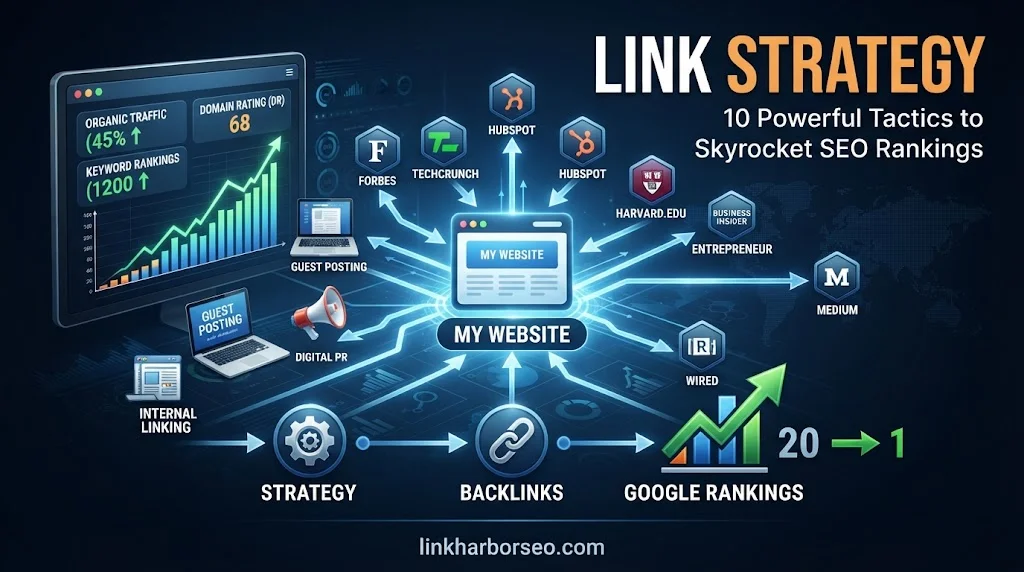
Building a smart link strategy is one of the fastest ways to grow your search rankings in 2026. Google still uses backlinks as a trust signal, and AI search tools now read them too.
This guide breaks down what actually works. No fluff. Just tactics you can use today to build a stronger link building strategy for your site.
What Is a Link Strategy in SEO?
A link strategy is your plan for earning and building links on purpose, not by chance.
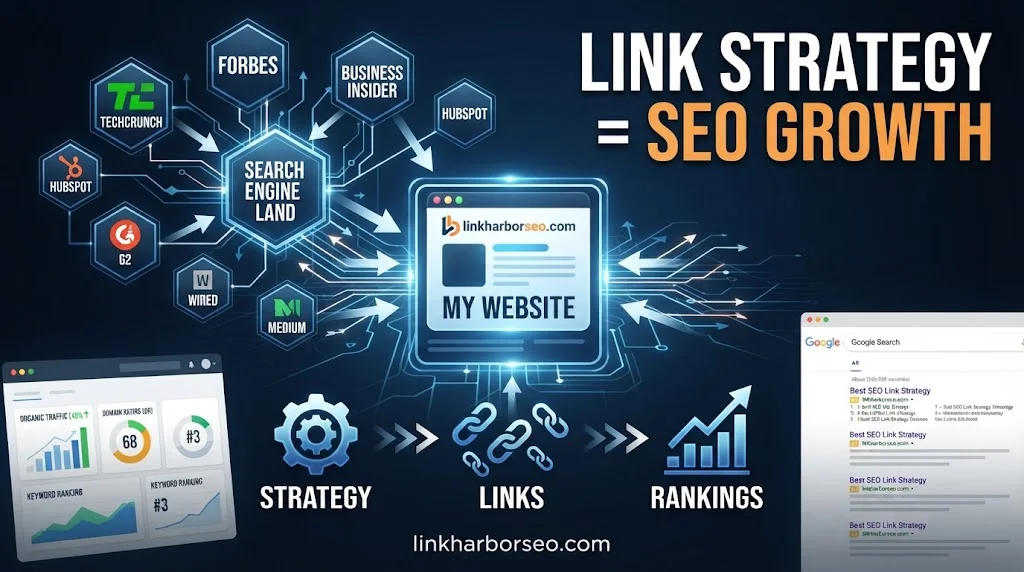
Many site owners confuse this term with plain link building. But there’s a real difference. Link building is the action. A linking strategy is the roadmap that tells you which links matter, why, and in what order to chase them.
Some links are easy wins. Others take months but carry far more weight. A smart SEO link strategy blends both types so you get quick traffic now and lasting authority later.
There’s also a newer layer to consider. AI search engines like ChatGPT and Google’s AI Overviews now scan the web for brand mentions and entity signals, not just clickable links. So your link strategy in 2026 needs to think past Google alone.
Why a Strong Link Building Strategy Matters for Rankings
Backlinks tell search engines your content is worth trusting. That trust turns into higher rankings.
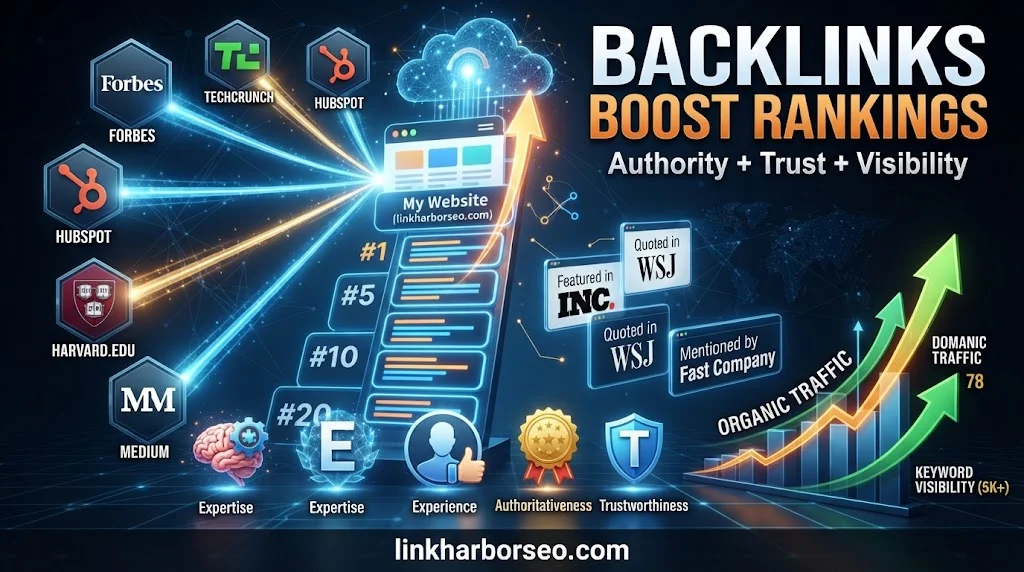
Google’s own search quality documentation confirms that links remain one of the top signals used to rank pages (Google Search Central). Sites with strong, relevant backlink profiles tend to outrank pages with thin or spammy link histories.
A good link strategy also builds what’s called E-E-A-T — Experience, Expertise, Authoritativeness, and Trust. Google leans on this framework heavily for topics tied to health, money, and safety (Google Search Quality Rater Guidelines).
Here’s the part most guides skip. Links don’t just move rankings anymore. They also shape co-citation and co-occurrence — when your brand name appears near trusted names in your industry. That pattern helps both Google and AI models understand who you are and what you do.
Even links marked nofollow carry some value now. They still expose your brand to new readers and add to your natural backlink profile.
Must Read: Link Building for SMB Owners: 15 Powerful Strategies to Grow Your Business
10 Powerful Link Strategy Tactics to Skyrocket Your Rankings
These are the tactics that build real, lasting authority. Some are quick. Some take patience. Together, they form a full SEO link strategy.
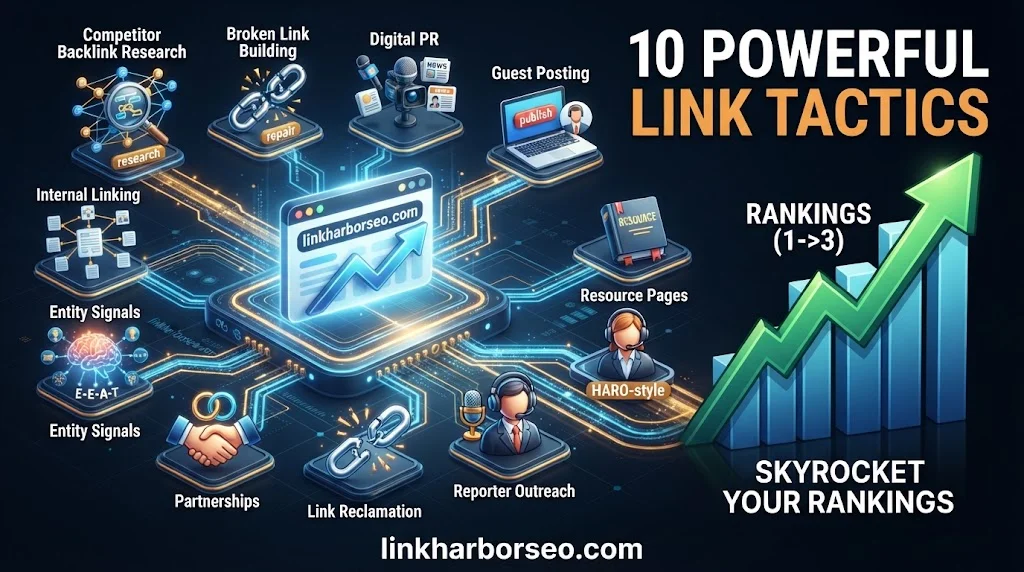
Study competitor backlinks. Look at where similar sites in your niche get their links. This reveals gaps you can fill with your own content.
Fix broken links. Find dead pages on other sites, then offer your own content as the replacement. Site owners want to fix broken links fast, so this tactic has a high success rate.
Run digital PR campaigns. Publish original data, a survey, or a bold industry take. Journalists and bloggers link to fresh numbers they can’t find anywhere else.
Guest post with purpose. Write for sites your audience already trusts. Skip mass guest posting. Focus on one strong piece for the right publication instead of ten weak ones.
Get listed on resource pages. Many sites keep curated lists of helpful links in a niche. A short, specific pitch can land you a spot.
Become a source for reporters. Platforms like Featured (formerly HARO) connect experts with journalists building stories. A sharp, quick answer can earn a link from a major outlet.
Reclaim lost links. Sites update or delete pages all the time, which breaks old links pointing to you. A quick email to the site owner often restores that link.
Build links with partners. Vendors, resellers, and business partners often have a page for links like yours. This is one of the easiest tactics to execute.
Strengthen your entity signals. Make sure your brand name, product names, and key topics appear consistently across the web. This helps large language models connect your brand to your niche, even without a direct link.
Use internal linking as leverage. Most guides treat internal links as a separate task. But strong internal linking passes authority from your best pages to newer ones, multiplying the value of every external link you earn.
Common Link Strategy Mistakes to Avoid
A few habits quietly wreck an otherwise solid link strategy. Watch for these.
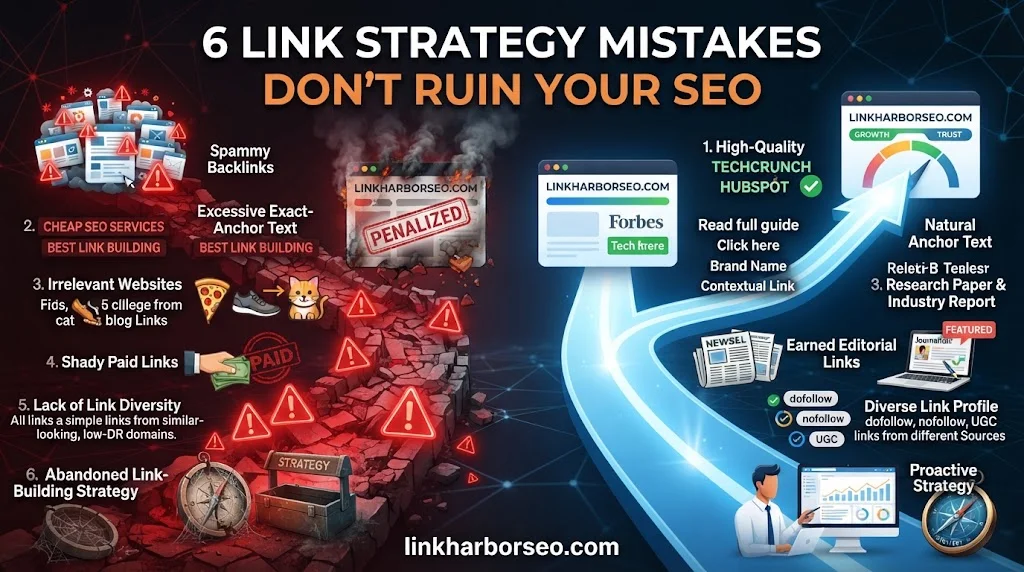
Chasing exact-match anchor text too hard. Over-optimized anchors look unnatural to Google and can trigger a manual penalty.
Prioritizing Domain Authority over relevance. A lower-authority site in your exact niche often beats a high-authority site with no topical connection.
Buying links from shady sellers. This breaks Google’s spam guidelines and risks a ranking penalty that can take months to recover from (Google Spam Policies).
Ignoring link diversity. A natural backlink profile includes a mix of follow, nofollow, sponsored, and UGC links. An all-follow profile can actually look suspicious.
Treating link building as a one-time task. Rankings shift. Links get removed. A real linking strategy needs ongoing attention, not a single sprint.
How to Track and Measure Your Link Strategy Results
Tracking turns guesswork into a repeatable system.
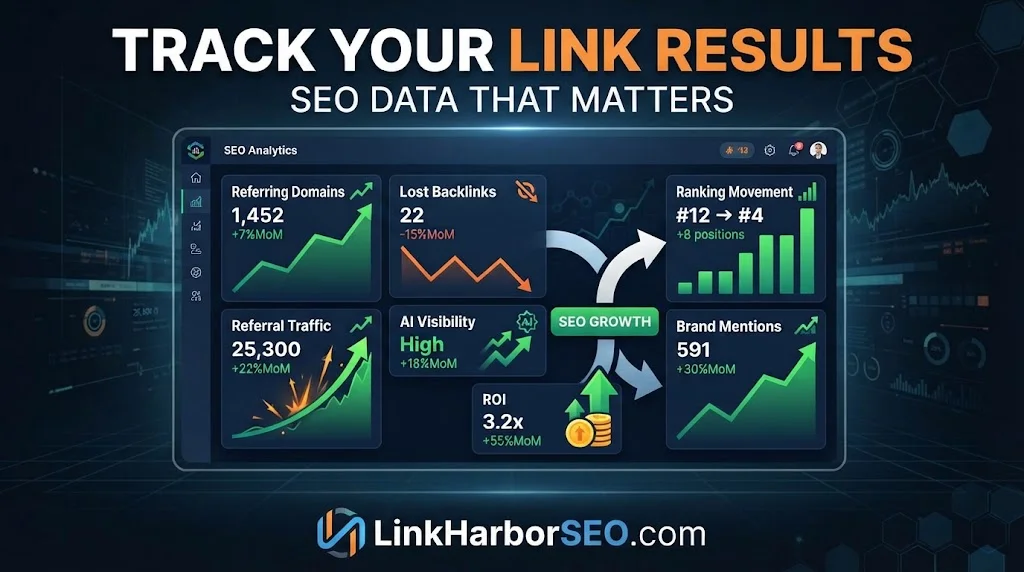
Start with your referring domains count and watch it grow over time. More unique domains linking to you usually means stronger topical trust.
Run regular audits to catch lost backlinks early. The sooner you spot a dropped link, the easier it is to win it back with a short outreach email.
Here’s a step most trackers skip. Start measuring how often your brand shows up in AI-generated answers on tools like ChatGPT or Perplexity. This is becoming a real signal of AI visibility, and it often improves alongside your traditional link metrics.
Finally, weigh cost against return. Track the time or budget spent per link against the referral traffic and ranking movement it produced. This simple math shows which tactics deserve more of your effort.
FAQs About Link Strategy
What is the best linking strategy for SEO?
The best approach mixes quick, accessible tactics like broken link building and resource page outreach with slower, high-value tactics like digital PR and original research. Relying on just one tactic rarely builds lasting authority.
What is the 80/20 rule in SEO?
This rule suggests that roughly 80% of your results come from 20% of your efforts. In SEO, that often means a small number of pages or backlinks drive most of your traffic and ranking power, so it pays to double down on what already works.
What are the top 5 SEO strategies?
Most experts point to strong keyword research, high-quality content, technical site health, on-page optimization, and a consistent link building strategy as the five pillars that drive lasting search visibility.
What is a LinkedIn strategy?
A LinkedIn strategy is a plan for posting, engaging, and networking on the platform to build brand visibility and connections. It ties into SEO indirectly by creating brand mentions and social proof that can support your wider co-citation signals across the web.
Must Read: 15 Expert Citation Link Building Tips to Dominate Local Search Rankings
Conclusion
A strong link strategy isn’t about chasing every backlink you can find. It’s about picking the right tactics, avoiding common mistakes, and tracking what actually moves your rankings. Start with two or three tactics from this list, stay consistent, and the authority will follow.

3 comments on “Link Strategy: 10 Powerful Tactics to Skyrocket Your SEO Rankings”