


Most small business owners think link building is only for big brands with big budgets. That’s not true. A single backlink from a trusted local source can move your rankings faster than a hundred generic mentions.
This guide breaks down 15 proven link building strategies for SMB owners in the U.S. No fluff. No jargon. Just tactics that actually earn backlinks, build trust, and grow real traffic.
Why Link Building for SMB Owners Matters More Than Ever
Backlinks are still one of Google’s strongest ranking signals. But now they also shape whether your business shows up in AI-generated answers.
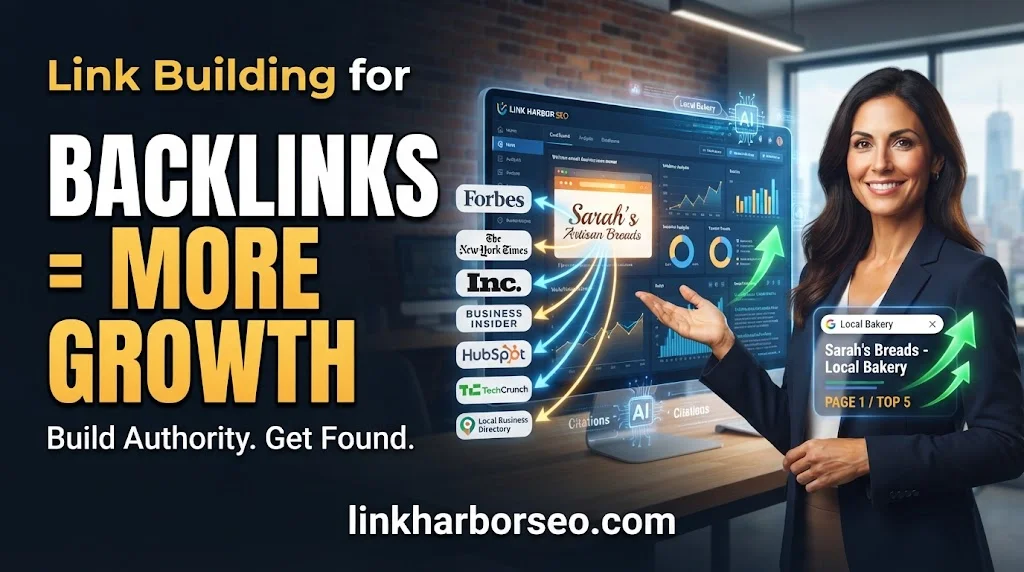
What is link building, exactly? It’s the process of earning links from other websites back to yours. Google treats each link like a vote of confidence. The more relevant and trustworthy the source, the more weight that vote carries.
Only a small share of small businesses actively invest in this work. That’s an opportunity, not a threat. According to Ahrefs research, nearly 91% of pages get zero organic traffic from Google, and a lack of backlinks is the top reason why.
There’s a newer layer to this now too. AI search visibility — how often your business gets cited in tools like ChatGPT, Perplexity, and Google’s AI Overviews — runs on many of the same signals as traditional link authority. Build links, and you build AI citation presence at the same time. This is often called generative engine optimization (GEO), and it’s quickly becoming as important as classic SEO.
Why does this matter for a small business specifically? Because your competitors, in most local markets, are not doing this work consistently. A steady link-building habit over six to twelve months can put you ahead of businesses with far bigger marketing budgets.
Must Read: Link Strategy: 10 Powerful Tactics to Skyrocket Your SEO Rankings
Foundational and Local Link Building Strategies for SMB Owners
Before chasing outreach or press coverage, get your basics locked in. These five tactics cost little to nothing and lay the groundwork everything else builds on.
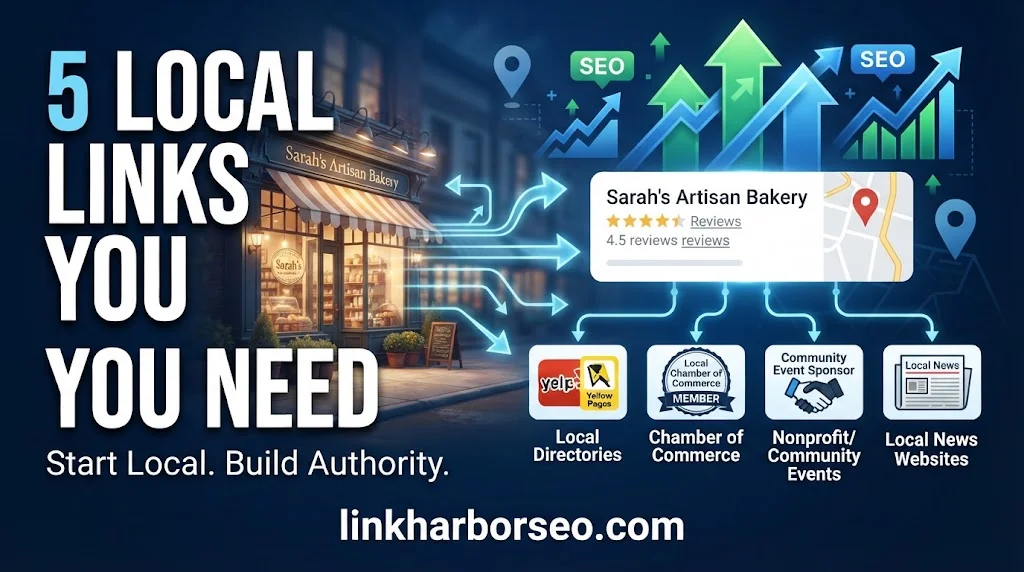
Optimize your Google Business Profile. This is the single highest-return move available to any local business. A fully filled-out profile — accurate hours, categories, photos, and posts — earns a citation from one of the most authoritative domains on the internet, and it directly feeds Map Pack rankings.
Build consistent NAP citations across trusted directories. NAP stands for name, address, and phone number. Keeping this information identical across sites like the Better Business Bureau, Yelp, Apple Maps, and industry-specific platforms (Houzz for home services, Avvo for legal, Healthgrades for medical) builds a foundation of local citation consistency that search engines trust.
Join your local Chamber of Commerce. Most chambers run public member directories that Google actively crawls. Beyond the direct backlink, membership opens doors to co-sponsorships, newsletters, and introductions to other local businesses.
Sponsor local events, nonprofits, or school programs. These sponsorships often come with a link from the event page, plus mentions in local press coverage. Nonprofit donor pages, in particular, tend to stay live for years, making them a durable link source.
Pitch small, newsworthy stories to local journalists. You don’t need national PR to get local press. A new hire, a community initiative, or an interesting data point from your business is often enough. Local newsrooms are short-staffed and genuinely need story ideas.
Must Read: Google Business Profile Checklist: 30 Essential Steps to Rank Higher on Google
Content-Led Link Building Strategies That Attract Natural Backlinks
Great content earns links on its own, without constant outreach. These five tactics turn your website into something other sites actually want to reference.
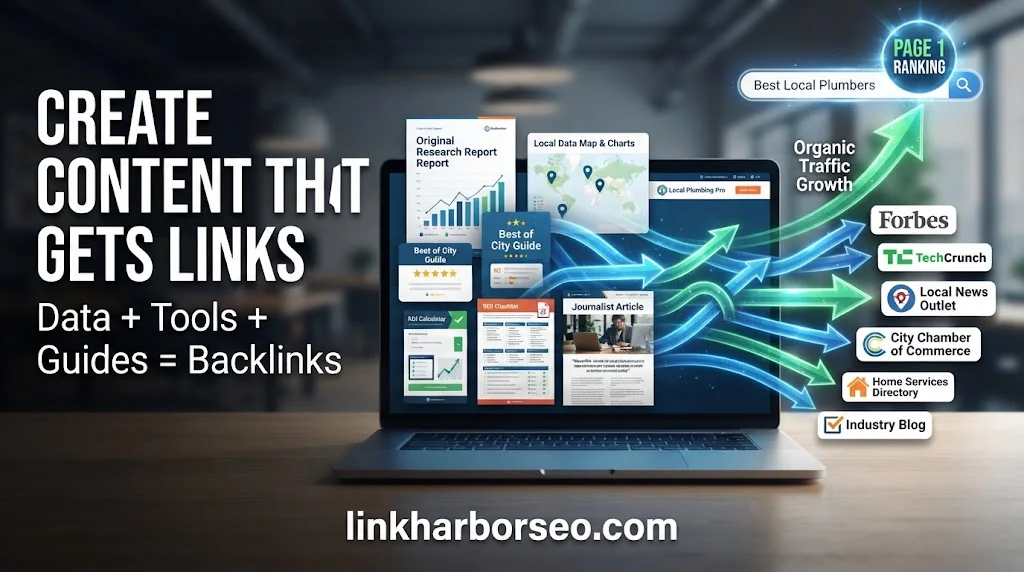
Publish original local data or a small survey. You don’t need a massive research budget. A 100-person customer survey, or a breakdown of your own operational trends, gives journalists and bloggers something concrete to cite. Original statistics are shown to increase citation rates in AI-generated answers, based on research from Wellows, which studied how large language models select and cite sources.
Create “Best of [City]” or local resource guides. Content like “Best Coffee Shops for Remote Work in Austin” earns natural links because tourism sites, neighborhood blogs, and local directories are always looking for content like this to reference.
Build a free tool, calculator, or checklist. A tax deadline calcular, a materials cost estimator, or a permit checklist becomes a linkable asset — something other sites reference because it saves their readers time.
Get featured in relevant listicles. Articles that round up “best” businesses in a niche or city are some of the most cited content types by AI tools, according to a Wix Studio AI research report. Reach out to smaller, local listicles first before targeting national ones.
Use journalist request platforms. Services like HARO (Help a Reporter Out) connect small business experts with reporters looking for quotes. This tactic works best when you respond quickly with a genuinely useful, specific answer — not a generic pitch.
Content format matters here more than most people realize. Data-driven pages, comparison charts, and structured lists tend to get pulled into featured snippets and AI summaries far more often than long, unstructured prose.
Relationship-Driven Link Building Tactics for Small Business Owners
Some of the best backlinks come from people you already know. These three strategies turn existing relationships into link-earning assets.

Leverage partner, supplier, and client relationships. If you use a tool, work with a supplier, or collaborate with another business, there’s often a natural way to earn a mention. Case studies work especially well here — your partner gets proof of their product in action, and you get a contextual backlink.
Build the owner’s personal brand. People trust people more than they trust faceless companies. A founder who posts consistently on LinkedIn, engages with industry conversations, and builds real visibility often earns backlinks the business alone never could. Podcast invitations, guest columns, and expert roundups tend to follow naturally once a personal brand gains traction.
Join industry associations and niche membership groups. Trade associations, professional bodies, and niche membership communities often maintain member directories with real domain authority. These links also come with networking value that extends beyond SEO.
Advanced Link Building Strategies Most SMB Guides Skip
These two tactics are underused, which makes them some of the least competitive link opportunities available right now.
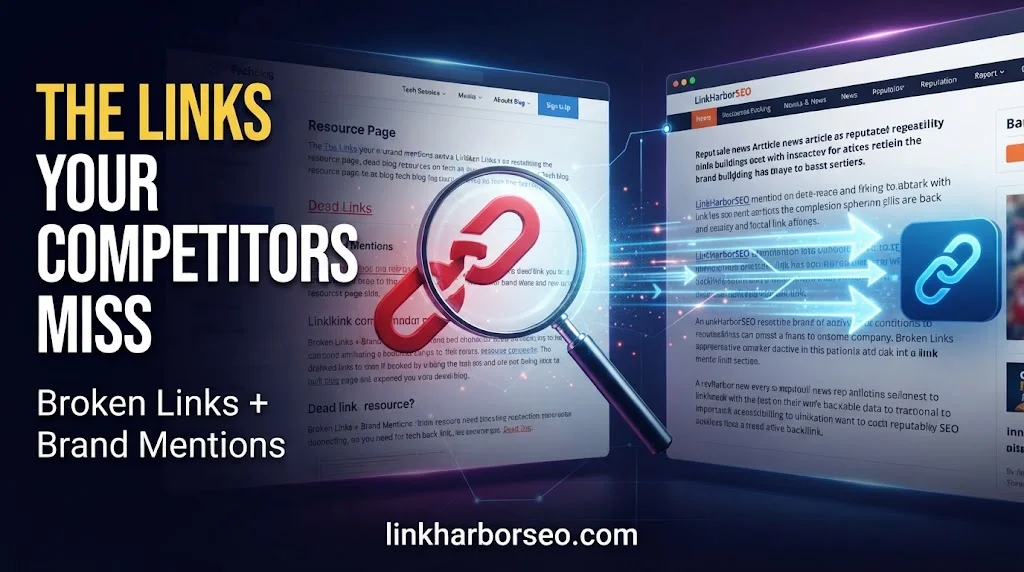
Try broken link building. Websites accumulate dead links over time — pages that used to exist but no longer do. Find a resource page in your niche, check it for broken outbound links using a free tool like the Check My Links Chrome extension, and offer your own relevant content as a replacement. It’s a low-friction pitch because you’re solving a problem, not asking for a favor.
Reclaim unlinked brand mentions. Your business name may already appear on other websites without a link attached — in a news article, a forum post, or a roundup. A simple Google Alert or a manual search for your brand name can surface these. A short, polite email asking the site owner to add a link is often all it takes.
Both tactics take some manual digging, but they carry a real advantage: almost nobody else is doing them.
Link Building Mistakes, Tools, and How to Measure Results
Even good strategies fail if you fall into common traps. Here’s what to avoid, what to use, and how to know it’s working.
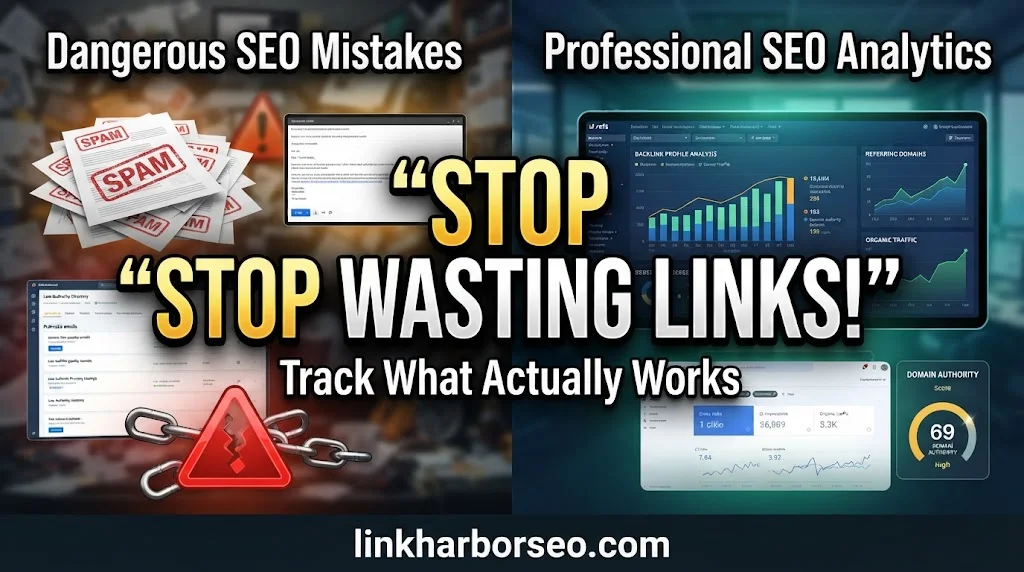
Avoid these mistakes:
- Buying cheap, bulk links from marketplaces
- Submitting to low-quality, irrelevant directories
- Publishing AI-generated guest posts with no real value
- Sending generic, mass outreach emails
Build a realistic tool stack. Start free: Google Search Console shows which pages already earn links and how they perform. Add a paid platform like Ahrefs or Semrush once you need deeper competitor backlink analysis. For outreach, a simple spreadsheet works at first; tools like Hunter or BuzzStream help once volume grows.
Track the right metrics. Watch your referring domains (not just total links), your domain rating or domain authority, and your organic traffic trend. A jump in branded search volume or AI citation mentions is also a strong signal that your link profile is gaining recognition.
Set realistic expectations. Local and long-tail keyword rankings typically respond within three to six months of consistent effort. More competitive terms can take nine to eighteen months. Link building compounds — the return grows as your profile strengthens.
FAQs
What is link building for SMB owners?
It’s the process of earning backlinks from other websites to a small business’s site, using tactics scaled to smaller budgets and local relevance instead of enterprise-level outreach.
How many backlinks does a small business need to rank?
There’s no fixed number. For most local keywords, fifteen to forty quality referring domains from relevant sources is enough to compete. Relevance matters more than raw count.
Is link building still important in 2026?
Yes. Backlinks remain a core Google ranking factor and now also influence citations in AI search tools like ChatGPT and Google AI Overviews.
What are the best free link building tactics for small businesses?
Google Business Profile optimization, local directory citations, partner outreach, unlinked mention reclamation, and broken link building all cost nothing but time.
How long does link building take to show results?
Local rankings often shift within three to six months. Competitive national keywords can take closer to a year or more, but the results compound over time.
Conclusion
Link building for SMB owners isn’t about outspending bigger competitors. It’s about being consistent, relevant, and a little more resourceful. Start with your Google Business Profile and local citations, layer in content and outreach, and keep showing up month after month. That consistency is what actually moves rankings — and it’s available to every small business owner willing to put in the work.

2 comments on “Link Building for SMB Owners: 15 Powerful Strategies to Grow Your Business”