


Your website can have great content and still sit on page two of Google. The missing piece is usually backlinks. But not just any backlinks — the right ones, from the right sites, pointed at the right pages.
That’s the whole idea behind targeted link building. It’s a slower-looking, faster-working way to grow your domain authority, and this guide breaks down exactly how it works, why it beats mass outreach, and how to run it the right way.
What Is Targeted Link Building?
Targeted link building means picking a small, specific list of relevant, high-authority websites and going after backlinks from those sites only — instead of blasting hundreds of random websites and hoping a few links stick.
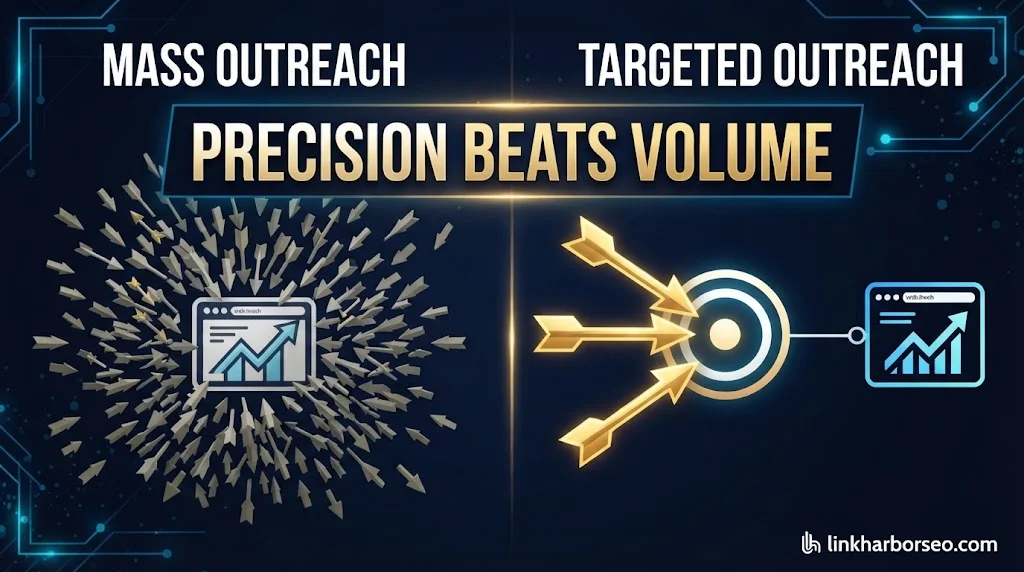
Think of it as precision over volume. A typical mass outreach campaign might email 500 to 2,000 websites and accept whatever links come back, relevant or not. A targeted link building strategy flips that. You build a shortlist of 20 to 50 sites that actually match your topic, your audience, and your authority level. Then you go after those links specifically.
Domain authority is a score (originally developed by Moz) that predicts how well a site is likely to rank in search results, based largely on the quality and quantity of its backlink profile (Moz’s official explanation). Other platforms use a similar 0–100 authority score under different names, but the concept is the same: more relevant, high-quality links in, higher authority score out.
Here’s the part most guides skip: relevance decides speed. A single backlink from a site that already covers your exact topic tells Google something a random high-authority link never can — that people who write about this subject vouch for your page. That’s a stronger authority signal than ten scattered links from unrelated niches, and it’s why targeted campaigns tend to move the authority needle faster, even with fewer total links.
Must Read: 15 Expert Citation Link Building Tips to Dominate Local Search Rankings
How Targeted Link Building Explodes Domain Authority Fast
Domain authority doesn’t grow in a straight line. It compounds. Here’s the mechanism behind that compounding, and why a targeted approach speeds it up.
Topical clusters beat scattered links.
When multiple relevant sites in your niche link to you, search engines start treating your site as a recognized voice on that topic. This is often called topical authority, and it builds faster when your backlinks cluster around the same subject rather than spreading thin across unrelated industries.
Fewer, better links carry more weight.
A backlink’s value isn’t fixed. It’s shaped by the linking page’s own authority, its relevance to your content, and where on the page the link sits (Google’s own explanation of how ranking systems evaluate signals). One in-content link on a respected, topically relevant page can outweigh a dozen weak, off-topic ones.
Referral traffic reinforces the authority signal.
When real visitors click through a targeted link and spend time on your page, that engagement data adds another layer of trust that a random, unclicked link never provides.
Realistic timeline: most sites see measurable authority movement within 8 to 16 weeks of consistent targeted link acquisition, though search engines need time to crawl, index, and weigh new links before the effect fully shows. High-authority placements sometimes register sooner. Referral traffic, on the other hand, can start the same week a link goes live.
Must Read: Link Building vs Content Marketing: 10 Powerful Differences You Need to Know
Proven Targeted Link Building Strategies for Fast Authority Growth
Not every link building tactic deserves your time. These are the ones that consistently produce relevant, high-authority placements.
Guest posting means writing a full article for a relevant site in exchange for a contextual backlink inside the content. It works best when the pitch is specific — a topic the site hasn’t already covered, not a generic offer to “write something.”
Niche edits (also called link insertions) place your link inside an already-published, already-ranking article. Because the page has aged authority, the impact often shows faster than a brand-new guest post.
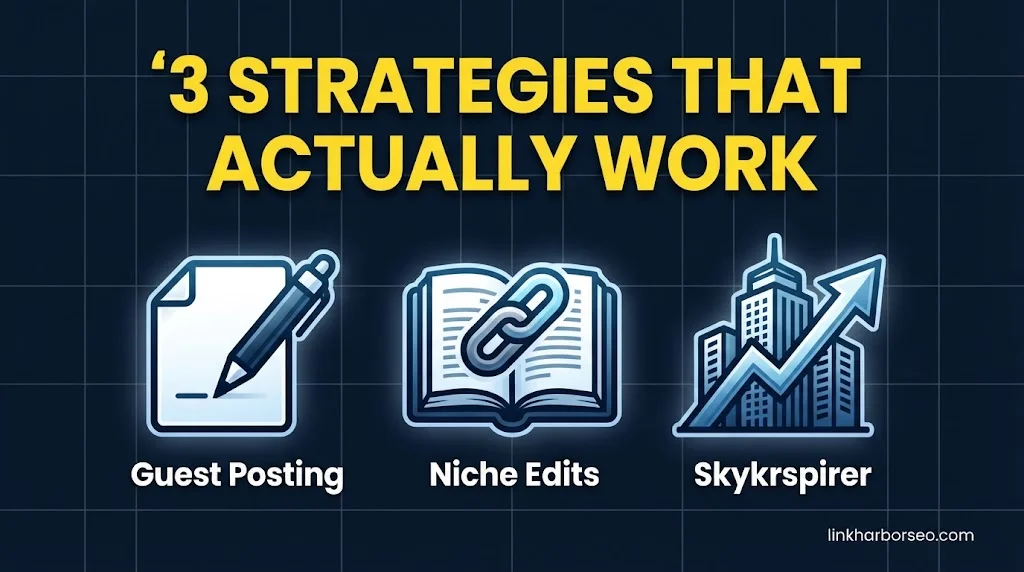
The skyscraper technique starts with finding a page in your niche that already has many backlinks, then building something noticeably better — more current data, clearer examples, a missing angle — before reaching out to the sites linking to the original.
Broken link building finds dead pages (404 errors) on relevant sites and offers your content as the replacement. The site owner already proved they value that type of resource, so your ask solves a problem rather than introducing a favor.
Unlinked brand mentions are sites already talking about your brand without linking to it. A short note asking them to add the link converts at a noticeably higher rate than cold outreach, since the relationship already exists.
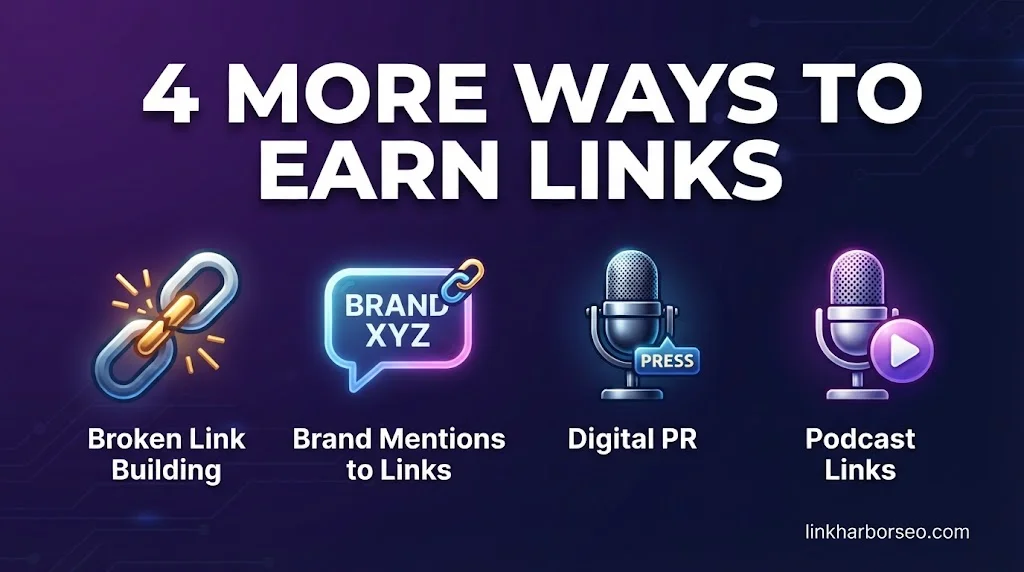
Digital PR and expert quote requests get you featured (and linked) in articles as a cited source, usually by responding to journalist or reporter queries with a sharp, specific quote.
Podcast guest appearances earn a dofollow link from the show notes page, plus the side benefit of reaching a pre-qualified, niche-relevant audience.
How to Qualify High-Authority Link Targets
A prospect list is only as good as its filters. Skipping qualification is how targeted campaigns quietly turn back into shotgun ones.
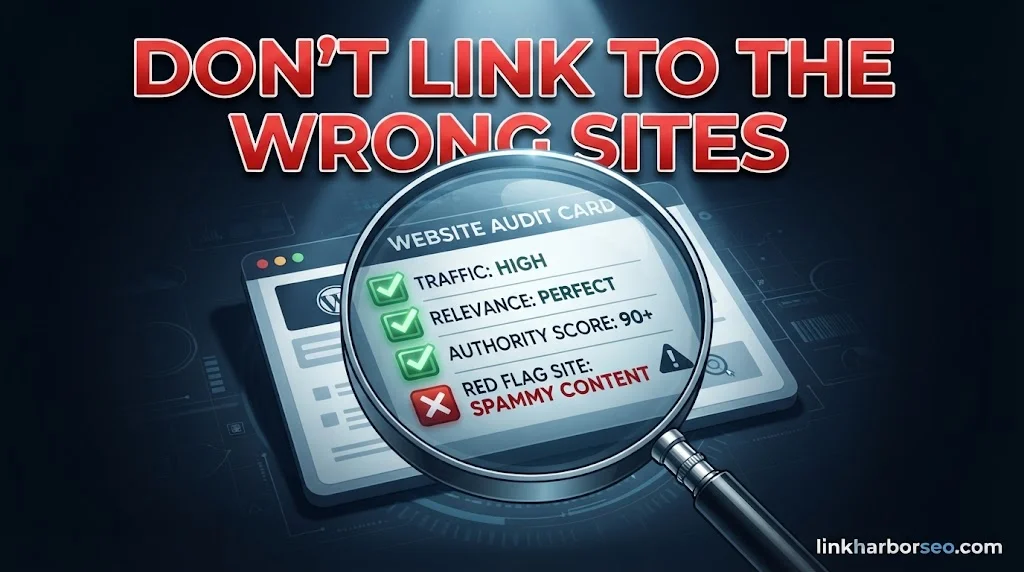
Check the authority threshold.
Most campaigns aim for sites with a domain authority score of 30 or higher. But authority alone isn’t enough — pair it with real traffic data.
Verify actual traffic, not just the score.
A high-authority page with almost no visitors sends little real value. A moderately authoritative page with 30,000+ monthly visits is usually the better target.
Confirm relevance at the page level, not just the domain.
A site can be in your niche overall while the specific article you’re targeting is off-topic. The link only helps if the page itself is relevant.
Match the audience to your USA market.
For businesses targeting American customers, confirm the linking site’s readership is actually US-based or serves that audience segment — a globally generic blog with no US relevance won’t send the right referral traffic even if its authority score looks good.
Watch for green flags: original content, an active publishing schedule, natural outbound links to other sites, and clear audience overlap with your own readers.
Watch for red flags: thin or duplicate content, no organic traffic, links buried in obvious paid-placement sections, or a domain that has nothing to do with your topic.
Common Mistakes That Slow Down Domain Authority Growth
Even well-intentioned campaigns lose momentum by falling into a few repeatable traps.
Chasing a high authority score with zero relevance. A powerful-looking score means nothing if the page has no organic traffic or audience overlap with your niche.
Turning “targeted” into a numbers game. Filtering for authority and niche, then blasting 400 templated emails, isn’t targeted link building — it’s segmented mass outreach wearing a disguise. Real personalization means referencing something specific the site actually published.
Ignoring dofollow versus nofollow. A nofollow link buried in a footer widget passes little to no authority signal. Always confirm the link type before counting a placement as a win.
Skipping measurement per link. Most campaigns track total link count and stop there. Tracking authority movement and referral sessions per individual link shows which placements actually worked, and which ones didn’t.
Buying links or forcing exact-match anchor text. Google treats paid links and manipulated anchor text as a violation of its spam policies, and getting caught can undo months of legitimate progress (Google’s link spam policy).
Outreach performance backs this up directly. The average cold outreach email gets roughly an 8.5% response rate, but personalized, small-batch, well-targeted campaigns regularly land between 15% and 25% — sometimes higher. Meanwhile, bulk campaigns sending 500+ emails at once see response rates fall as low as 1%. Precision, not volume, is what moves the number.
FAQs About Targeted Link Building and Domain Authority
Is link building part of SEO?
Yes. Link building is one of the three core pillars of off-page SEO, alongside on-page optimization and technical SEO. Search engines use backlinks as a trust and relevance signal, so a site’s link profile directly affects how well it can rank.
What is the 80/20 rule in SEO?
The 80/20 rule (the Pareto principle applied to SEO) means roughly 80% of your search results come from about 20% of your effort — usually a small set of high-impact pages, keywords, or backlinks. In link building, this shows up clearly: a handful of highly relevant, high-authority placements often do more for rankings than hundreds of average ones.
What are some link building strategies?
The most reliable strategies include guest posting, niche edits (link insertions), the skyscraper technique, broken link building, reclaiming unlinked brand mentions, digital PR and expert quote outreach, and podcast guest appearances. Each works best when the target site is chosen for relevance and audience fit, not just its authority score.
What are the most frequently asked questions on Google?
Google’s People Also Ask feature typically surfaces related questions based on real search behavior for a topic. For link building, common PAA-style questions include “What is link building in SEO?”, “How many backlinks do I need to rank?”, “Is guest posting still effective?”, and “What’s the difference between dofollow and nofollow links?” These questions shift over time as search behavior changes, but they usually track closely with the core sub-topics of the main query.
Conclusion
Domain authority doesn’t grow because you collected more links. It grows because you collected the right ones — from sites your audience actually reads, on pages that are actually relevant, with links that are actually followed. Targeted link building takes more upfront thought than mass outreach, but it pays that effort back in faster authority growth, better referral traffic, and a backlink profile that holds up under scrutiny.

5 comments on “How Targeted Link Building Can Explode Your Domain Authority Fast”