


A contextual backlink is a link to your page that sits inside the main body of another website’s content, surrounded by relevant text. It is one of the strongest kinds of links you can earn, because it shows both relevance and editorial intent.
This guide explains what qualifies as a contextual backlink, how to judge whether one is worth having, and how to earn them safely. You’ll also see which tactics carry risk and how to check that a link is working.
What Are Contextual Backlinks?
Contextual backlinks are defined by where they appear and what surrounds them. Understanding both makes the rest of link building easier.
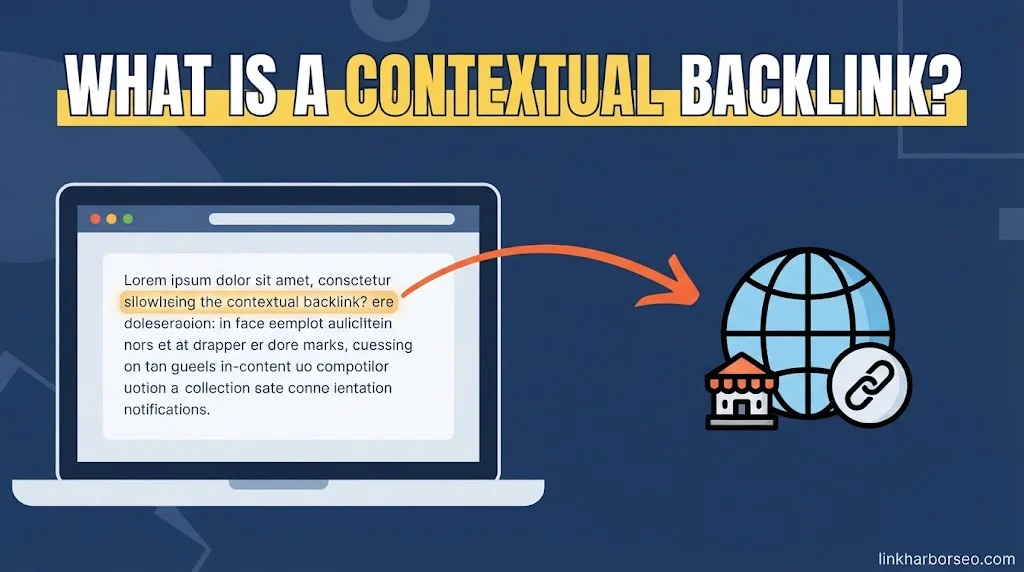
A contextual backlink is a link from another website to your page that sits inside the main body of that site’s content, surrounded by relevant text. The surrounding words explain why the link is there. That helps readers decide whether to click and helps search engines understand what your page is about.
Here is a simple example. Imagine a food blogger writes: “For a quick weeknight dinner, this 15-minute garlic noodle recipe uses pantry staples.” If the words “15-minute garlic noodle recipe” link to your page, that’s a contextual backlink.
A quick test for spotting one:
- The link is inside the main body content, not a sidebar, footer, or bio.
- The text around it is relevant to the page it points to.
- It points from another website to yours.
If all three are true, it’s a contextual backlink.
Contextual vs Non-Contextual Backlinks
Non-contextual links live outside the main content. Common spots include sidebars, footers, directory listings, comment sections, and author bios.
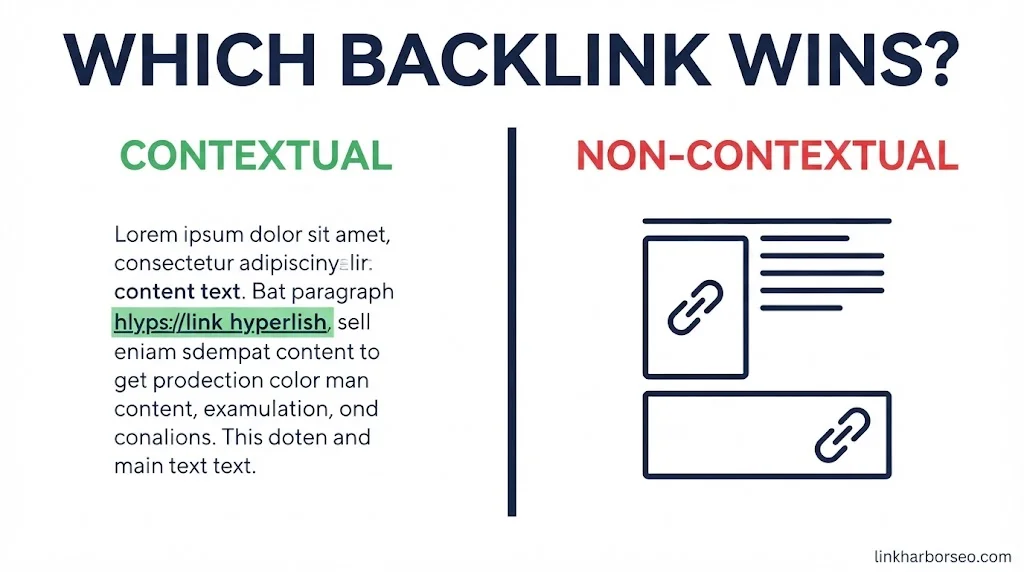
| Contextual backlink | Non-contextual backlink | |
|---|---|---|
| Typical placement | Inside body paragraphs | Sidebar, footer, directory, bio, comments |
| Surrounding text | Relevant and explanatory | Little or none |
| Editorial choice | Usually a deliberate choice | Often templated or automatic |
| Typical SEO value | Generally a stronger signal | Generally a weaker signal |
Non-contextual links aren’t worthless. A local directory listing or an author bio link can send real visitors and build brand awareness. They just tend to say less about your page’s topic.
Do Internal and Outbound Links Count as Contextual Backlinks?
No, not strictly. A backlink is a link from another website to yours, also called an inbound link. Internal links (between pages on your own site) and outbound links (from your site to others) can also sit in body content, but they are not backlinks.
The difference matters for planning. Internal links are something you control. Backlinks have to be earned from other site owners.
One note on terms: “contextual backlinks” also appears in note-taking software, where it means something unrelated. This article covers the SEO meaning only.
Must Read: Competitor Backlink Analysis: A Step-by-Step Guide
What Makes a Contextual Backlink Worth Having?
A contextual backlink is worth having when it comes from a relevant, real page, sits naturally in the body text, and was earned or labeled honestly. Placement inside body text is only the starting point. A link from a weak, off-topic, or manipulated page can be worth very little.
The Quality Checklist
Use this list to judge a link opportunity before you spend time or money on it.
- The topic matches. The linking page covers a subject closely related to your page.
- The link sits in the body. It’s inside real paragraphs, not a footer, sidebar, or sitewide element.
- The sentence justifies the link. A reader would understand why it’s there.
- The page is real. It’s indexed, has genuine content, and could plausibly get traffic.
- The site has editorial standards. It isn’t obviously built to sell links.
- The link isn’t buried. A page with dozens of outbound links dilutes each one.
- The attribute fits the situation. An earned editorial link, one the site owner added by their own choice, normally has no special attribute. A paid one should be labeled.
If a prospect fails several of these, move on.
Anchor Text: Natural vs Forced
Anchor text is the clickable words in a link. It should describe the destination in a way that reads naturally.
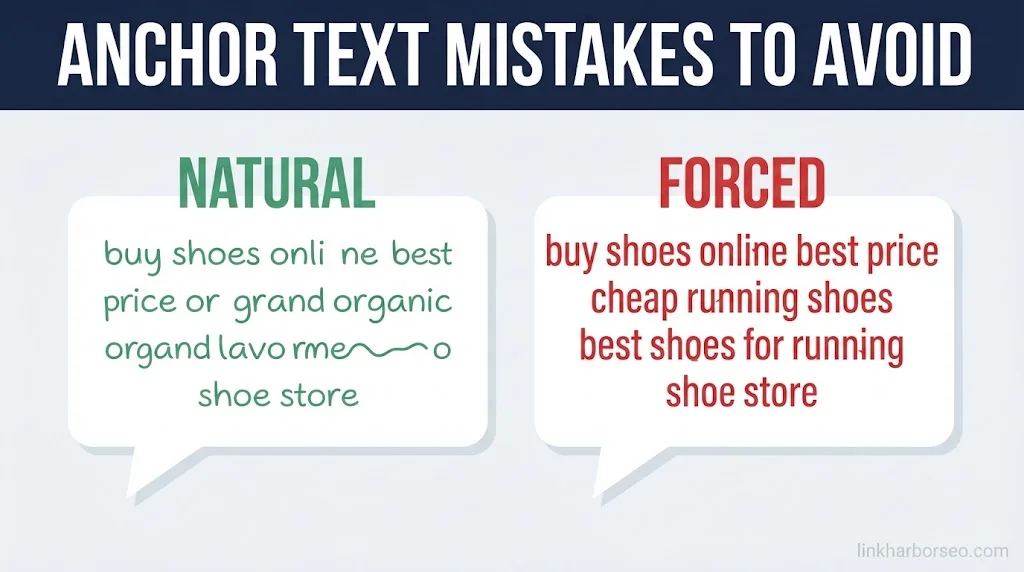
The main types are:
- Branded: your company or site name
- Exact match: the precise keyword you want to rank for
- Partial match: a phrase that includes part of the keyword
- Generic: words like “this guide” or “read more”
- Naked URL: the web address itself
Compare these two examples:
- Natural: “Many small shops start by tracking where customers heard about them before buying any software.”
- Forced: “If you want the best cheap link building services, try best cheap link building services today.”
In the natural version, the linked phrase describes the page. In the forced version, the keyword is repeated for its own sake. Google has no published ideal ratio for anchor types. Aim for natural variety, and let the surrounding sentence decide the wording.
Are Contextual Backlinks Dofollow?
Not automatically. Whether a link passes ranking credit depends on the rel attribute the linking site uses. A link with no attribute is a normal link. Site owners can also add rel="nofollow", rel="sponsored", or rel="ugc".
“Dofollow” isn’t an official Google attribute. It’s industry shorthand for a link that carries none of those qualifiers.
Google’s guidance on qualifying outbound links explains the purpose of each value:
sponsoredis for advertisements and paid placements.ugcis for user-generated content such as comments and forum posts.nofollowis for links the site owner doesn’t want to vouch for.
Google says links marked with these values will generally not be followed. That doesn’t make them useless. A nofollow link inside a strong article can still send referral traffic and build brand exposure. A healthy link profile usually contains a mix.
Do Contextual Backlinks Help SEO?
Yes, generally. Contextual backlinks help search engines find your page and understand what it’s about, but they don’t guarantee rankings. Some popular claims about them are overstated, so it helps to be precise.
What they do:
- Discovery and relevance. Google says it uses links as a signal for relevance and to find new pages to crawl.
- Endorsement. Links are the basis of Google’s original PageRank system, which Google has described as one of its ranking signals.
- Traffic. A well-placed link can send readers directly, regardless of rankings.
What the data shows. A Backlinko analysis of 11.8 million Google results found that the #1 result had, on average, 3.8 times more backlinks than results in positions 2 through 10. It also found that the number of different domains linking to a page correlated with rankings. The study draws on older data, so treat it as directional. It also shows correlation, not proof of cause. Top pages may earn more links because they already rank well.
Myths to avoid:
- Domain Authority is not a Google ranking factor. It’s a score created by Moz, and similar scores exist from Ahrefs (Domain Rating) and Semrush (Authority Score). They estimate link strength. They don’t feed Google’s rankings. See this Search Engine Journal explainer.
- Links don’t guarantee rankings. Content quality, search intent, and competition still matter.
- Quantity isn’t the goal. A few relevant, editorially placed links usually beat many weak ones.
Internal links also play a supporting role. Google’s link best practices recommend that every page you care about has a link from at least one other page on your site, so linking related pages in context helps both readers and search engines.
How to Get Contextual Backlinks
Earning a contextual link means giving another site a good reason to mention you inside its content. This section gives a repeatable process, then compares the main tactics.
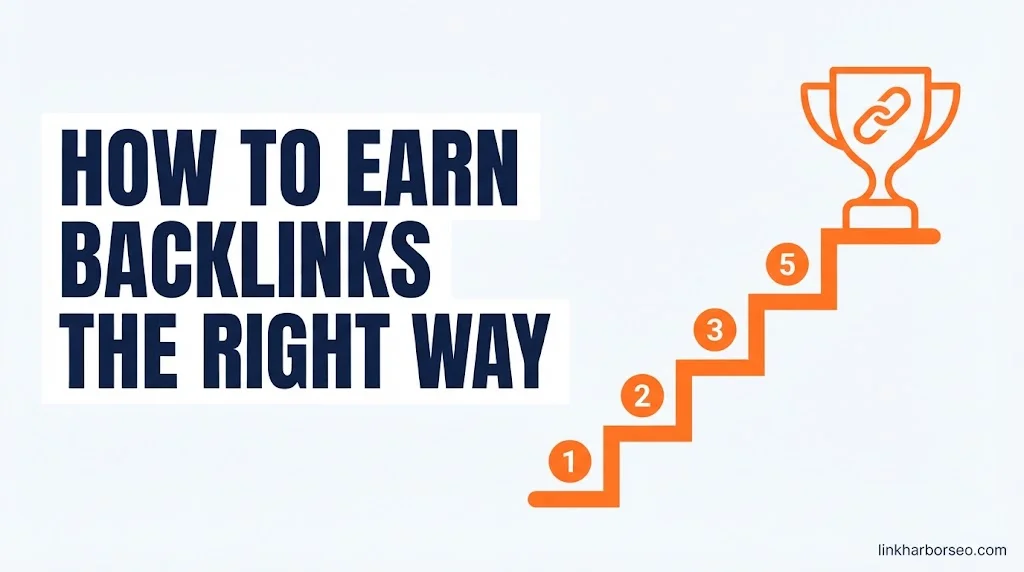
A Step-by-Step Process
- Build something worth linking to. This could be original data, a clear guide, a free tool, or a well-explained answer to a common question.
- Find pages that already cover the topic. Look for articles where your resource would genuinely help the reader.
- Check each target against the quality checklist. Drop weak or off-topic prospects early.
- Send a specific, useful pitch. Name the page, point to the exact spot where your resource fits, and explain what the reader gains.
- Suggest a natural placement. Offer a sentence or two, with descriptive anchor text, that fits their writing.
- Follow up once. A single polite reminder is enough.
- Verify and record the link. Confirm it’s live, then log the URL, anchor text, and date.
The Main Tactics Compared
Each tactic trades off effort, cost, and risk differently. The ratings below are general, not measured figures.
| Tactic | How it works | Effort | Cost | Risk |
|---|---|---|---|---|
| Guest posting | You write an article for another site that links back where relevant | High | Low to medium | Low if editorial, higher if paid or keyword-stuffed |
| Digital PR and expert commentary | You provide data, quotes, or stories that journalists and bloggers reference | High | Medium | Low |
| Link insertions (niche edits) | You ask a site owner to add a link to an existing article | Medium | Often paid | Medium to high if paid without labeling |
| Broken link building | You tell a site owner about a dead link and suggest your page as a replacement | Medium | Low | Low |
| Resource page outreach | You ask curators of “helpful links” pages to include your resource | Medium | Low | Low |
| Unlinked mentions | You ask sites that mention your brand to add a link | Low | Low | Low |
| Paid placements | You pay a site to publish content or a link | Low | Varies widely | High unless labeled |
Some quick notes on the less obvious ones:
- Guest posting carries a specific caution. Google’s spam policies name guest posts that contain links with optimized anchor text, distributed for ranking purposes, as an example of link spam. Keep anchors descriptive and the content genuinely useful.
- Digital PR works best when you have something newsworthy, like original research or a real expert.
- Broken link building is simple: find a dead link on a relevant page, then offer a working alternative.
- Unlinked mentions are often the easiest wins. Someone already wrote about you, so the ask is small.
Which Tactic Should You Start With?
Match the tactic to your resources:
- Small or local business: Start with unlinked mentions, local partnerships, and relevant resource pages. They cost little and fit small budgets.
- Content-rich site: Invest in link-worthy assets and digital PR, then add selective guest posting on relevant sites.
- Agency or larger team: Use a mix of tactics, with a firm quality checklist for every placement.
Can You Buy Contextual Backlinks? Risks and Common Mistakes
Contextual links are the type most often sold, which is why this section matters. Knowing where Google draws the line can save you money and protect your site.
Paid Contextual Links and Google’s Rules
Buying contextual backlinks can violate Google’s rules, depending on how the links are labeled. Google’s spam policies list buying or selling links for ranking purposes as link spam. That includes exchanging money for links or for posts that contain links, and trading goods or services for links.
The policies also call out advertorials and native advertising where payment is involved. The concern is links that pass ranking credit, or links with optimized anchor text in articles, guest posts, or press releases distributed on other sites.
Paid links aren’t banned outright. Advertising is legitimate when the links are labeled with rel="sponsored" or rel="nofollow", so they don’t pass ranking credit. The problem is presenting paid placement as a natural endorsement.
Some link marketplaces advertise contextual links as carrying no risk. That claim is too broad. “Contextual” describes where a link sits. “Compliant” describes how it was obtained and labeled. A link can be one without being the other.
There’s also a cost to being wrong. Google notes that after a link spam update, any ranking benefit from links its systems neutralize is lost, and that benefit can’t be regained.
If you’re considering a seller or marketplace, ask:
- Will the links be labeled with the right
relattribute where payment is involved? - Can you see real example sites, and are they relevant to your topic?
- Do you control the anchor text and target page, and is it kept natural?
- Are guarantees, removal terms, and refund terms in writing?
If a seller can’t answer these clearly, treat that as a warning sign.
Common Mistakes and Red Flags
Watch for these patterns:
- Chasing authority scores over relevance. A high score on an off-topic site is a weak link.
- Sitewide or templated placements presented as editorial.
- Private blog networks (PBNs), which are groups of sites built mainly to pass links to other sites, and sites that exist mainly to sell links.
- Repeated exact-match anchors across many links.
- Pages crowded with outbound links, where yours is one of dozens.
- Undisclosed paid links with no
relattribute. - Skipping the index check. A link on a page Google hasn’t indexed does little.
- Ignoring link quality after placement, then never noticing when it’s removed.
How to Check and Track Your Contextual Backlinks
Getting a link placed is only half the work. Verify it, then watch for changes over time.
Verification checklist:
- The link is live and points to the right URL.
- It sits inside body content.
- The anchor text matches what you agreed.
- The
relattribute is what you expect (none, or a label if it was paid). - The linking page is indexed.
Tools that help:
- Google Search Console has a Links report showing top linked pages, top linking sites, and top linking text. It’s free. Semrush has a walkthrough of the report.
- Ahrefs, Semrush, and Moz Link Explorer each maintain their own link index. Their counts differ from each other and from Search Console, so compare trends within one tool.
What to track: new and lost links, referral traffic from each link, and ranking changes for the target page.
If a link disappears, a short, polite message to the site owner often fixes it. For harmful links you can’t remove, Google offers a disavow tool, but its own documentation calls it an advanced feature to use with caution, says most sites don’t need it, and advises using it only when you have many spammy or artificial links that have caused, or are likely to cause, a manual action. Misusing it can harm your site’s performance.
FAQ
What does “contextual backlinks” mean?
Contextual backlinks are links from another website to your page that sit inside the main body of that site’s content, surrounded by relevant text. The words around the link explain why it’s there, which helps readers and search engines understand what your page is about.
For example, if a blogger writes “this 15-minute garlic noodle recipe uses pantry staples” and links those words to your recipe, that is a contextual backlink. Links in sidebars, footers, directories, or author bios are non-contextual.
Are backlinks still relevant in 2026?
Yes, backlinks are still relevant, but quality and relevance matter more than the number of links. Google’s documentation still says it uses links as a signal for relevance and to find new pages to crawl. Large studies also keep finding that pages with more links, and links from more different sites, tend to rank higher. Backlinko’s analysis of 11.8 million Google results is one example, though it’s an older, correlation-only study.
That doesn’t mean links guarantee rankings. Content quality, search intent, and competition still matter, and manipulative links can lose their value. Google’s spam policies treat buying or selling links for ranking purposes as link spam.
What is the 80/20 rule in SEO?
The 80/20 rule in SEO is a rule of thumb: roughly 80% of your results come from about 20% of your efforts. It applies the Pareto principle to search marketing. Google has no such rule, and the split is a guide, not an exact measurement.
In practice, it means a small share of your pages, keywords, or links often drives most of your traffic. Here are a few examples:
- Content: A handful of pages may bring in most of your organic visits.
- Keywords: A small group of search terms may account for most clicks.
- Links: A few strong, relevant backlinks may matter more than many weak ones.
The takeaway is to find what already works, such as your top pages in Google Search Console, and put your time there first. Don’t spread your effort evenly across everything.
What are the different types of backlinks?
Backlinks are commonly grouped by where they sit, how they were obtained, and how the linking site labels them. The categories overlap, so one link can fit several.
Conclusion
A contextual backlink is a relevant link placed inside body content, and its value depends on relevance, quality, and how it was earned. Check each opportunity against the quality checklist, favor tactics that give other sites a real reason to link, and label any paid placements properly. Start by auditing one link opportunity this week.

2 comments on “Contextual Backlinks: What They Are and How to Build Them”