


Guest posts and directory listings alone won’t carry a page to the top anymore. Advanced link building techniques help you earn high-quality backlinks that lift SEO rankings without risking a penalty.
Below are 25 advanced link building strategies built for US websites. Each is short, clear, and easy to act on.
Advanced Link Building Strategies: Why Links Still Drive SEO Rankings
Links are still one of the clearest signals of trust on the web. Here is what “advanced” means and why it pays off.
What is advanced link building?
It is the practice of earning editorial backlinks at scale through useful assets, PR, and real relationships. You don’t buy links or trade them in bulk.
Some facts show why it matters:
- Ahrefs studied about 14 billion pages. It found that 96.55% get zero organic traffic from Google. Its advice is to build backlinks, target topics people search for, and match search intent.
- Backlinko studied 11.8 million results. The top result had 3.8x more backlinks than positions 2 to 10. That is a correlation, not proof of cause.
What are the benefits of link building?
- Stronger rankings for competitive terms.
- More referral traffic from relevant sites.
- Higher domain authority and better link equity.
- Wider brand exposure and new industry contacts.
AI search adds a twist. In a study of 75,000 brands, Ahrefs found that branded web mentions were the strongest signal tied to AI Overview visibility. Backlinks were linked to it too, but less strongly. So aim for links and mentions together.
Must Read: Advanced Link Building Services That Deliver Powerful SEO Results
What type of links are best for SEO?
The best are contextual links inside helpful content on relevant, trusted sites. They are earned, not paid for, and they use natural anchor text.
Google draws firm lines. Its link spam policy names paid links, excessive link exchanges, and large-scale guest posting with keyword-heavy anchors. Paid links should carry a sponsored or nofollow attribute.
25 Advanced Link Building Techniques That Actually Work
Don’t try all 25 at once. Pick a few that match your niche and budget, then add more.
1. Original research.
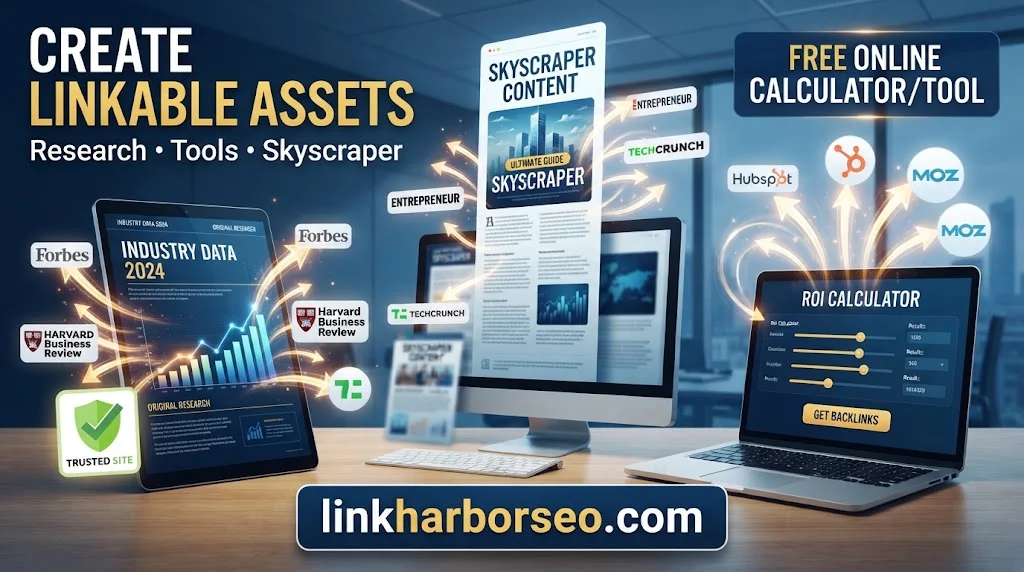
Journalists love fresh numbers. A solar installer could survey homeowners about energy bills. Publish the results with clear charts and a one-line summary people can quote.
2. Skyscraper technique, updated.
Find a page that already collects links. Build a newer, cleaner, deeper version with expert input. Then pitch the sites that linked to the old one. Ahrefs and Semrush list them fast.
3. Free tools and calculators.
People link to tools that save time. A software firm could publish a free invoice generator. Useful tools become linkable assets that keep earning.
4. Visual assets.
Turn data into an infographic or a step-by-step visual. Pitch it to sites that covered the topic before. Offer embed code that credits your page.
5. Case studies.
Share your method and your real results. Writers link to proof. Backlinko grew its reputation on this format.
6. Outdated-stat replacement.
Find pages that cite old numbers. Publish updated data, then email the editor with the fix. It helps them, and it earns you the link.

7. Digital PR and newsjacking.
Watch Google Trends and breaking news. David Meerman Scott coined the word newsjacking. Add quick expert comments while the story is still hot.
8. Expert quote platforms.
Connectively, the former HARO, closed on December 9, 2024. Qwoted, Featured, and Source of Sources now fill the gap. Answer fast, and state your credentials first.
9. Bold publicity campaigns.
Offer something people talk about. A mattress brand could pay testers to review beds for a month. Promote it through email, paid social, and trade shows.
10. Thought leadership.
Publish original views backed by data. Real author bios support E-E-A-T. Others cite sources they trust.
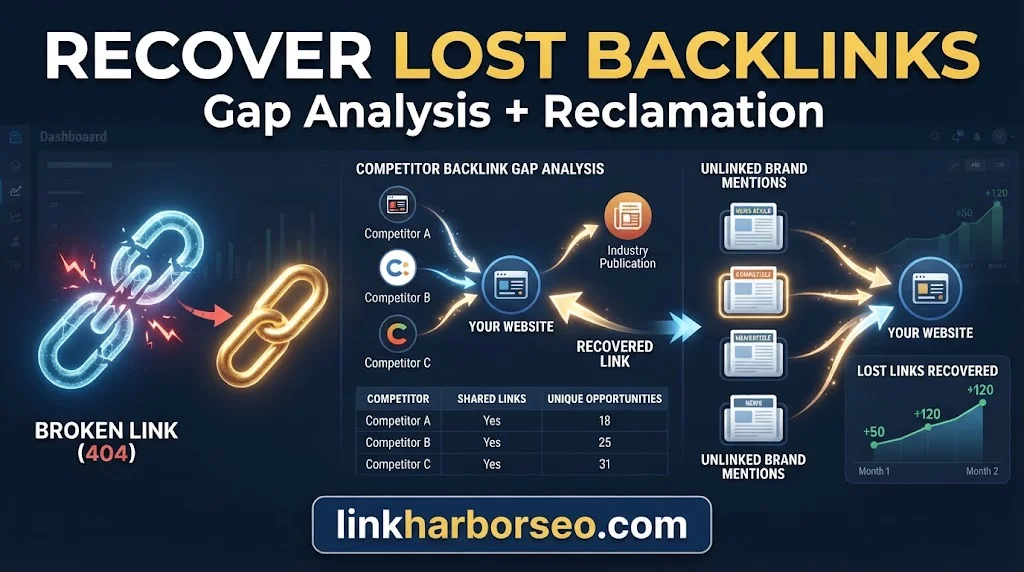
11. Broken link building.
Find dead links on relevant sites with Ahrefs or the Check My Links Chrome extension. Offer your page as the replacement.
12. Dead-competitor reclamation.
When a rival site closes, its pages return 404 errors. Their referring domains may still link to nothing. Reach out with a matching resource.
13. Competitor backlink gap analysis.
Use Ahrefs Link Intersect or the Semrush Backlink Gap tool. Find domains that link to two or more rivals but not to you. Start with the most relevant.
14. Unlinked brand mentions.
Set up Google Alerts or Mention. When a site names you without a link, ask kindly. Do it only when a link helps the reader.
15. Lost link recovery.
Check the Google Search Console links report. If a good link vanished, find out why. Then ask the site owner to restore it.
16. Resource page outreach.
Search your topic inurl:resources on Google. Pitch your guide to page curators. Educational and niche sites often welcome new picks.
17. Niche edits.
Add your link to an existing, relevant article. Keep it editorial and unpaid. Paid insertions need a sponsored attribute under Google’s rules.
18. Page-2 boosting.
Use Search Console to spot pages in positions 11 to 20. Point links at those first. Then add internal links from your strongest pages.
19. Careful guest posting.
Write for the reader, not for the anchor. Pick relevant sites and use a natural author bio. Build lasting ties with editors.
20. Podcast guesting.
Guest spots earn show-note links. Hosting your own show brings experts who share each episode with their followers.
21. Personal outreach with video.
Choose one high-value page. Find the right editor on LinkedIn. Send a short note or Loom video that shows what you’d add. Offer value before you ask.
22. Influencer partnerships.
Team up with niche creators who already reach your audience. Co-create content that earns links on both sides.
23. Community and social presence.
Join Slack groups like Link Building HQ. Share helpful answers on Reddit, Quora, and LinkedIn. These links are often nofollow or ugc, but they build mentions and traffic.
24. Local and event links.
Host a free workshop or back a community event. Local news, chambers of commerce, and Meetup pages may cover it. A dental clinic could run a kids’ oral health day.
25. Partner and supplier links.
Ask brands, vendors, and venues to list you. Dealer locators, partner pages, and vendor lists all count. A caterer can earn links from event venues.
A note on safe tiering. Some marketers use tiered link building. Keep it clean. Promote your best earned links through newsletters, social posts, and PR. Never aim spam at them.
A note on outreach email. Warm up new inboxes and keep daily volume low. Personalize every message. The CAN-SPAM Act requires a clear opt-out and a physical address.
Risky Link Building Techniques to Avoid and How to Track Results
Shortcuts can undo months of good work. Tracking keeps you on course.
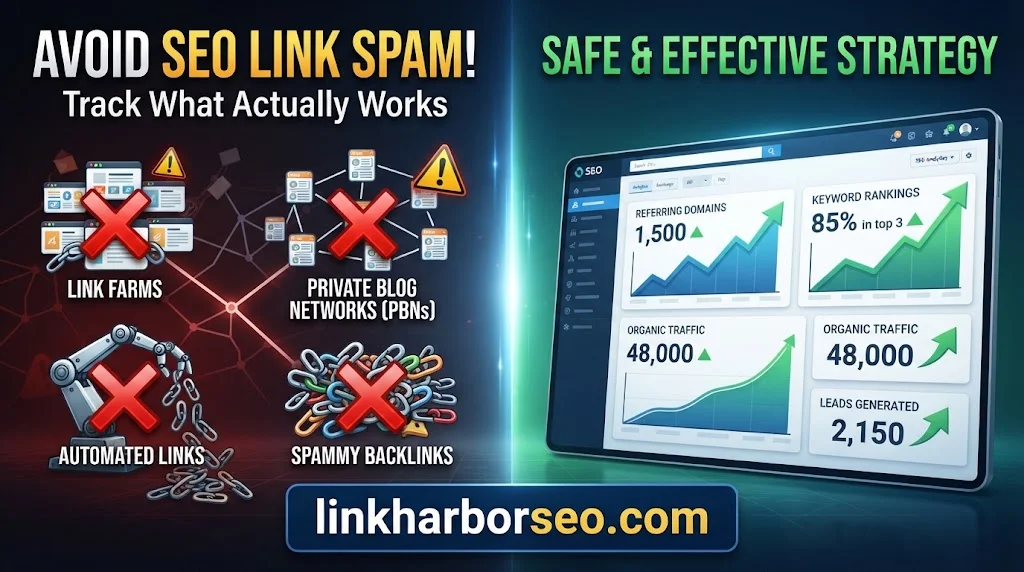
Steer clear of these:
- Private blog networks and link farms.
- Paid links with no
sponsoredornofollowtag. - Mass reciprocal link swaps.
- Automated link creation.
- Cloud-stacking style networks built only for links.
Should you use the disavow tool? Google calls it an advanced feature. Use it only after a manual action or a clear pattern of spammy links.
How do you measure link building results? Check four numbers each month:
- Referring domains, not just total backlinks.
- Keyword rankings for target pages.
- Referral traffic in GA4.
- Leads or sales from linked pages.
Google Search Console, GA4, Ahrefs, and Semrush cover all four. A healthy backlink profile grows steadily. It shows varied anchor text and links from sites in your topic area.
How long does link building take to work? Google publishes no timeline. Review results monthly rather than daily.
Try this simple 90-day plan:
- Month one: audit your links, fix broken ones, and recover lost ones.
- Month two: publish one linkable asset and pitch it through digital PR.
- Month three: grow partner and community ties, then review the data.
FAQs
What are some effective methods for link building?
Digital PR, original research, broken link building, competitor gap analysis, and link reclamation all work. Relationship-based outreach adds staying power. Mix two or three methods. Focus on relevance and real value.
What are the top 5 SEO strategies?
Five core strategies are search intent-focused content, technical SEO, link building, on-page optimization, and brand authority. Technical SEO covers speed and crawlability. Brand authority draws on E-E-A-T and web mentions.
What are the benefits of link building?
It supports higher rankings and more referral traffic. It builds domain authority, brand visibility, and industry ties. It also earns brand mentions across the web, which AI search tools may use when picking sources.
What type of links are best for SEO?
Editorial, contextual links from relevant, trusted sites are best. The link should sit inside helpful content. It should use natural anchor text and come without payment or pressure.
Conclusion
Advanced link building techniques work best when quality, relevance, and relationships come before volume. One well-earned link from a trusted, relevant site can beat dozens of weak ones. Google’s rules also reward this approach and punish shortcuts.
Start small. Pick two or three techniques that fit your niche, such as original research, broken link building, or digital PR. Add more once you see results.
Track your referring domains, keyword rankings, and referral traffic every month. Keep what works and drop what doesn’t. Also aim for brand mentions across the web, since AI search tools may use them when choosing sources.
Patience matters here. Strong backlink profiles are built one honest link at a time. Which of these 25 will you try first?

3 comments on “25 Advanced Link Building Techniques That Can Skyrocket Your SEO Rankings”