


Most businesses know they need backlinks. Few can tell a real advanced link building service apart from a repackaged directory-submission package with a fancier name.
This guide breaks down what “advanced” actually means in 2026, which services are worth paying for, and how to vet a provider before you sign a contract.
What Makes a Link Building Service Advanced in 2026
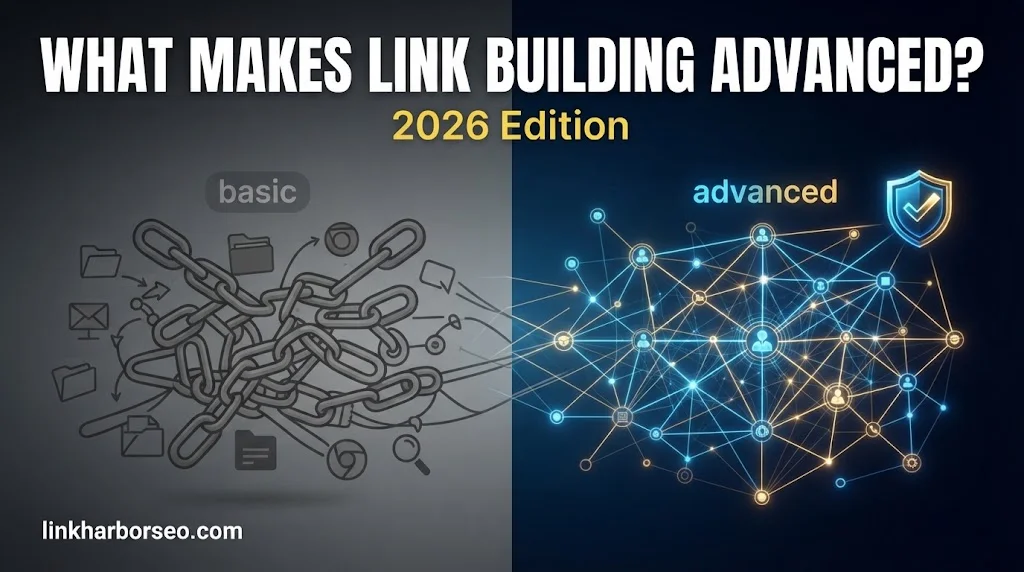
An advanced link building service goes past basic directory submissions and bulk link drops. It focuses on relevance, editorial trust, and topical authority instead of raw link count.
The old playbook — mass guest posts, link wheels, private blog networks — has gotten riskier every year. Google’s spam-detection systems, including SpamBrain, now flag manipulative link patterns in near real time rather than months later.
What separates advanced link building from basic link building?
Basic link building chases volume: cheap, fast, low-relevance placements. Advanced link building chases fit — links from sites your actual audience reads, placed inside content that makes sense.
Here’s a trap worth knowing: some providers market themselves as “100% white-hat” while their own pricing pages quietly sell link wheels, link clusters, or bulk private-site placements. Reading the fine print on a package matters more than reading the homepage copy.
Core Advanced Link Building Services Worth Paying For
Not every tactic labeled “advanced” earns its price tag. These are the ones backed by real results.
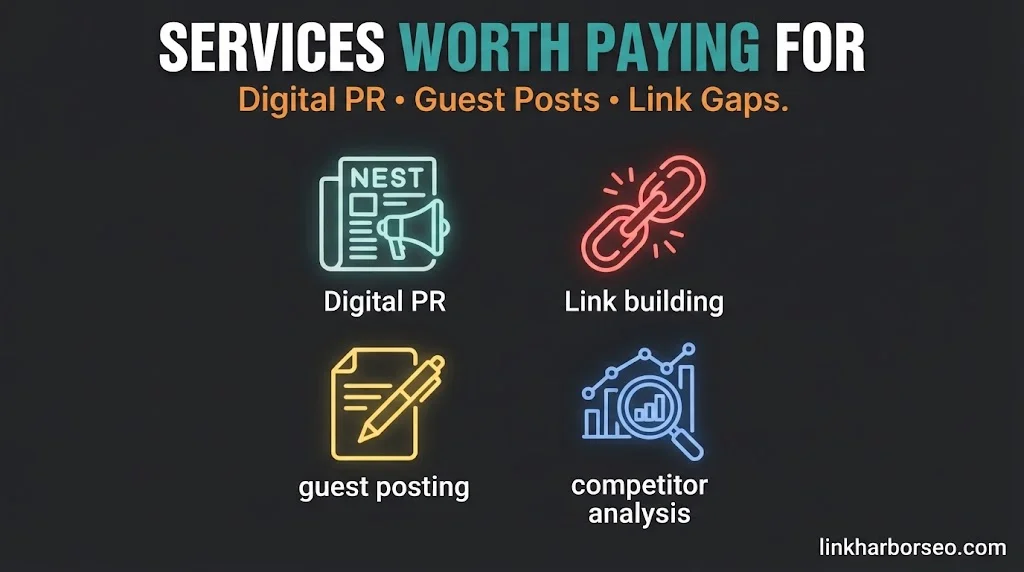
Digital PR and editorial link acquisition tops the list for a reason. It earns links through newsworthy data, original research, and expert commentary rather than cold pitching. Digital PR has the highest reported success rate of any link building tactic, at roughly 48.6%, well ahead of guest posting and other outreach methods.
Broken link building and link reclamation offer some of the highest reply rates in the industry. You’re helping the site owner fix something broken, not asking for a favor.
Niche-relevant guest posting still works — but only the editorial kind. A guest post written for a publication’s actual readers, placed because it adds value, is different from a paid placement stuffed with exact-match anchors.
Competitor backlink gap analysis finds where competitors already earn links and lets you pursue the same or better opportunities.
Here’s the piece most guides skip: entity-based and AI-search link building. This means earning brand mentions and citations that help you show up in AI Overviews and answer engines, not just traditional search results. As generative search grows, being cited consistently across credible sources matters for visibility beyond the ten blue links.
Must Read: Link Building Outreach Strategies That Actually Get Replies and Backlinks in 2026
How to Vet an Advanced Link Building Agency Before You Pay
A confident sales page tells you nothing about link quality. Ask these questions before signing anything.

What questions should I ask a link building agency?
Ask where links come from, how anchor text is chosen, whether reports include live URLs, and who owns the content once it’s published.
Watch for red flags: guaranteed rankings, vague “high-DA” claims with no mention of niche relevance, bulk-link packages sold by volume, or a provider that won’t show sample placements before you commit.
Real editorial links live on active pages — pages that get updated, get read, and sit inside a normal content flow. A quick way to check: search the site name plus “site:domain.com” and see if it looks like a real publication or a shell built only to sell links.
One more due-diligence step that pays off: compare a provider’s marketing claims against their actual package details. If a page promises “ethical, white-hat only” but the pricing tiers list link wheels or bulk private-site links, that’s a real inconsistency worth asking about directly.
Link Building Costs, Timelines, and Measuring ROI
Pricing varies widely, and understanding why helps you avoid both overpaying and underpaying.

How much does a single backlink cost?
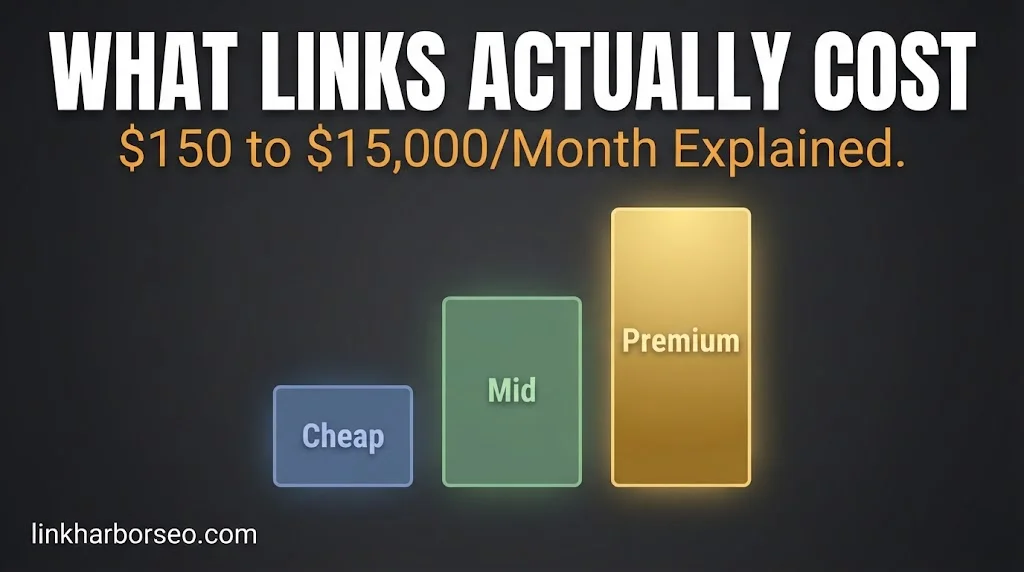
Reported averages for a high-quality backlink through guest blogging run around $692, and separate market data puts the average price SEOs are willing to pay for one high-quality link at roughly $509. Costs shift based on the publisher’s authority, niche, and editorial standards.
What does a monthly retainer look like?
Managed link building campaigns from established agencies typically run $3,000 to $15,000 per month, depending on scale and competitiveness. Agencies running fully managed campaigns often charge in the range of $150 to $500 per link when content creation is bundled in.
Why do cheap links cost more later?
A $30 directory link might look attractive, but low-quality, irrelevant placements can trigger cleanup work, lost trust, and wasted content spend — expenses that dwarf the original savings.
How long until I see results?
Most campaigns need several months before ranking movement becomes visible. Consistent link building spread across a year tends to outperform the same number of links crammed into a few weeks, since sudden spikes can draw unwanted scrutiny.
Measure more than link count.
Track referring domain quality, referral traffic, ranking movement on target keywords, and — increasingly — whether your brand shows up as a cited source in AI-generated answers.
Must Read: 25 Advanced Link Building Techniques That Can Skyrocket Your SEO Rankings
FAQs
What is a link building service?
A link building service is a professional offering where an agency or specialist earns backlinks to your website from other, relevant sites. The goal is to build domain authority, improve search rankings, and drive referral traffic through links that search engines see as trustworthy.
What are the top link building agencies?
There’s no single “top” agency — the right fit depends on your niche, budget, and whether you need digital PR, guest posting, or a broader campaign. Look for agencies that share real placement samples, avoid bulk-link packages, and are transparent about where your links will appear.
How much does link building cost?
Costs vary by link type and quality. Individual high-quality links often run $500 to $1,000+, while managed monthly campaigns from agencies typically cost $3,000 to $15,000 per month. Cheap links under $100 usually come from low-quality networks and carry real risk.
What are the benefits of link building?
Link building improves search rankings, builds domain authority, and sends referral traffic from relevant audiences. It also strengthens brand credibility and, increasingly, helps your business get cited as a trusted source in AI-generated search answers.
Conclusion
Advanced link building services aren’t defined by fancy language on a homepage. They’re defined by relevance, transparency, and real editorial trust. Before choosing a provider, check what they actually sell, not just what they claim. A smaller number of genuinely relevant links will always outperform a stack of cheap, disconnected ones.

2 comments on “Advanced Link Building Services That Deliver Powerful SEO Results”