


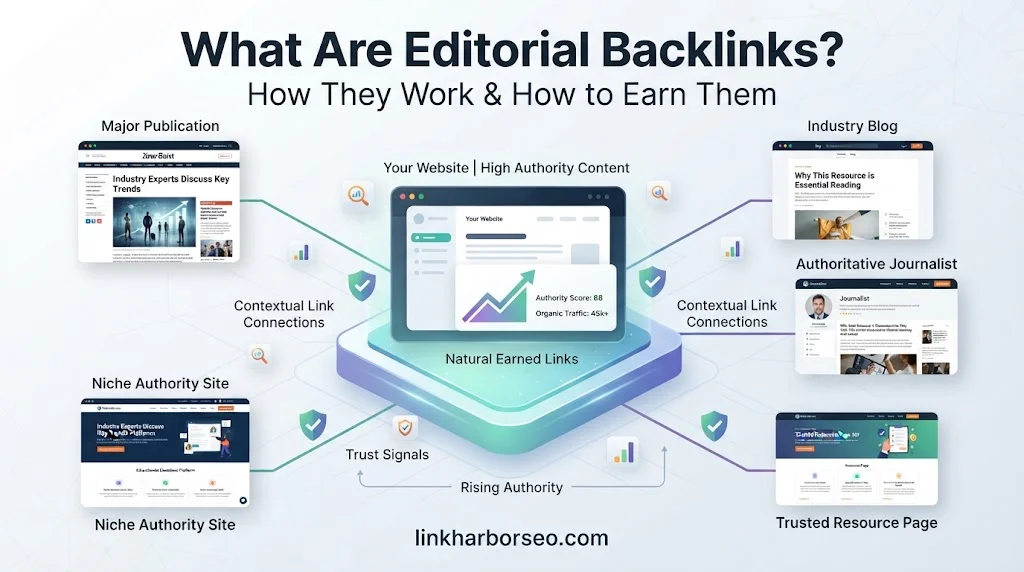
An editorial backlink is a link another website gives you on its own, without you asking for it or paying for it. A writer, blogger, or journalist adds it because your content is useful enough to reference. That’s the entire concept — everything else is detail.
By the end of this guide, you’ll know how to tell a true editorial links apart from a guest post or a paid placement, what kind of content actually earns them, and a realistic process for getting more of them without wasting time on tactics that don’t work.
Quick answer: An editorial backlink is a link that another site adds to its content voluntarily, because your page, data, or resource genuinely helped them make a point — not because you requested it, paid for it, or traded something for it. It usually appears in the body of an article, often near a statistic, quote, or recommendation, and it’s the link type Google trusts most because no one can buy or force it.
What Makes a Link “Editorial” (And What Doesn’t)
Most explanations of editorial links stop at “unpaid and unrequested.” That’s true, but it’s not specific enough to actually use. Here’s a more practical test.
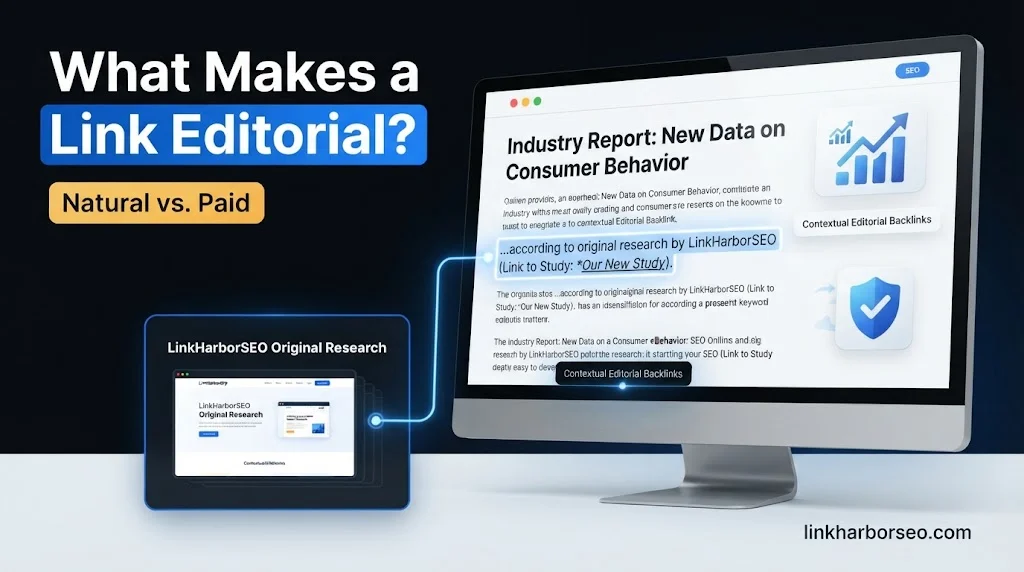
A link is genuinely editorial when it meets all four of these conditions:
- You didn’t ask for it. No outreach email, no request, no follow-up.
- No money or goods changed hands. Not a payment, not a product sample, not a service trade.
- It sits inside the content, not in a sidebar, footer, or author bio, and it’s placed in context — next to the idea it supports.
- Would the writer have linked to something like this anyway? If yes — they needed a source, example, or data point for a point they were already making — the link is genuinely editorial.
A journalist citing your original survey data while covering an industry trend is a clean example. So is a blogger linking to your free tool inside a “best resources” section they wrote independently. What doesn’t count: a link you inserted yourself in a guest post, a link added to an old article after you emailed the site owner and offered a small fee, or a mention with no link at all (that’s a brand mention, not a backlink — related, but not the same thing).
Editorial links are usually dofollow, since that’s the natural default when a writer adds a link with no ulterior motive. But a nofollow citation in the body of an article can still be editorial in spirit — the intent behind the link matters more than the HTML attribute.
Editorial Backlinks vs. Guest Posts, Niche Edits, and Paid Links
People often use “editorial link” loosely to describe any link that isn’t obviously spammy. That blurs an important distinction. Here’s how the main link types actually compare.
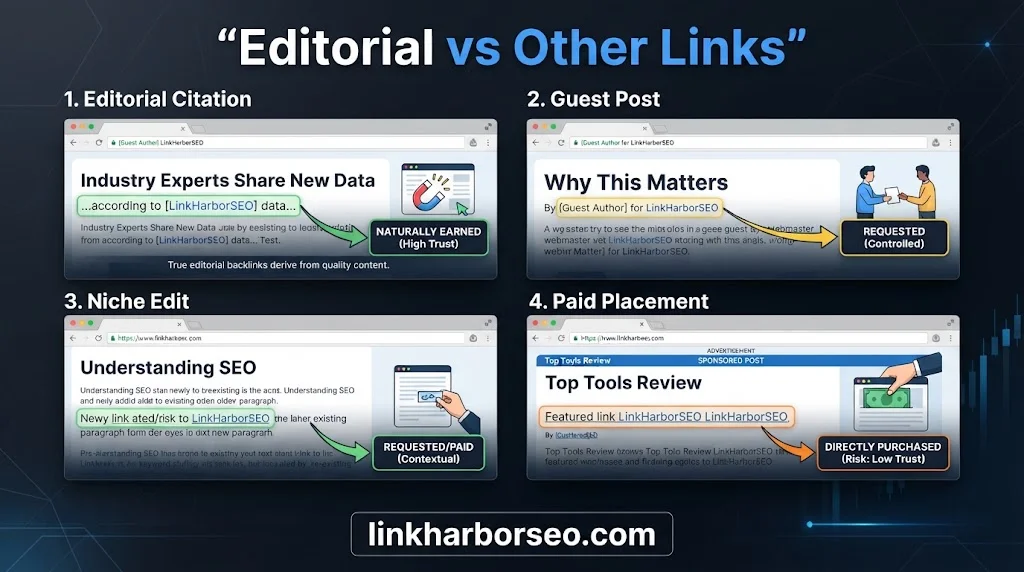
| Link type | Requested? | Paid or traded? | Typical placement | Risk level |
|---|---|---|---|---|
| Editorial link | No | No | In-content, contextual | Low |
| Guest post | Yes (you pitch and write it) | Sometimes | In-content, self-placed | Low to moderate |
| Niche edit | Yes | Usually yes | Inserted into existing content | Moderate to high |
| Paid link | Yes | Yes | Anywhere | High |
Guest posts sit in a gray zone. You’re contributing real content, and a well-written guest post can earn its link fairly — but because you’re writing the article and placing your own link, it’s not purely “earned” the way a spontaneous editorial citation is.
Niche edits, where an existing published page is edited to add your link, usually involve some form of payment or negotiation, which pushes them closer to paid links than editorial ones, even when the site looks legitimate.
Paid links are the most clear-cut: money for placement, which puts them at odds with how search engines expect links to work.
Why Editorial Backlinks Carry More SEO Weight
Search engines treat links as votes of confidence between sites. The reason editorial links carry more weight than other link types comes down to one thing: they can’t be manufactured at scale.
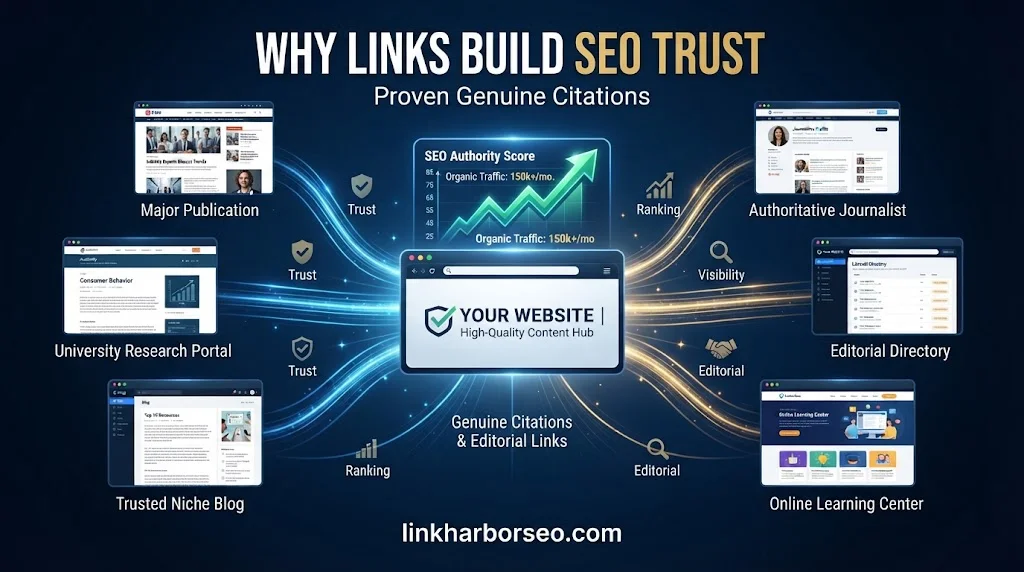
Google’s own spam policies define link spam as creating links mainly to manipulate rankings. The policy specifically calls out buying, selling, and excessive link exchanges as violations. An editorial link doesn’t fit that description at all — nobody arranged it, so there’s nothing to detect or penalize. That’s exactly why it holds up better over time than links that came from outreach deals or paid placements.
There’s also a practical trust signal at play: a site only cites you editorially if your content genuinely helped make their argument. That’s a much stronger quality filter than any link-building tactic can fake.
Bottom line: editorial links aren’t valuable because they’re rare. They’re valuable because the only way to get them is to actually deserve them.
What Kind of Content Actually Earns Editorial Links
Not every page on your site can realistically attract editorial links. Product pages, service pages, and generic blog posts rarely get cited by other writers — there’s nothing there for them to reference. The content types that do earn links share one trait: they give other people a reason to point to them.
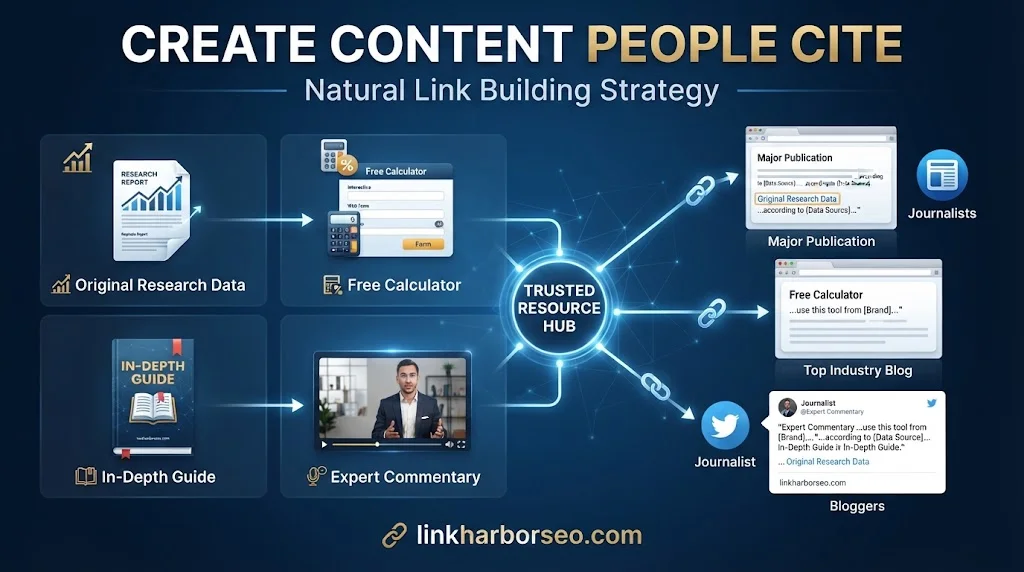
- Original data or surveys. If you run your own research and publish the findings, writers covering that topic need a source, and original data is the easiest thing to cite.
- Free tools or calculators. A useful, working tool gets referenced in “best resources” roundups and how-to articles without any outreach on your part.
- Genuinely more complete guides. Not just longer — actually more useful than what’s already ranking. Writers link to the resource they’d want to read themselves.
- Expert commentary or a unique point of view. A specific, well-argued take that isn’t available anywhere else gives journalists something worth quoting.
What generally doesn’t earn editorial links: sales pages, thin listicles that repeat common knowledge, and content that copies the structure of what’s already ranking. If a dozen other pages already say the same thing, there’s no reason for a writer to pick yours.
How to Actually Earn Editorial Backlinks (Realistic Process)
Here’s where a lot of advice gets vague. The honest reality is that most editorial links still start with some form of visibility-building — you can’t just publish something great and wait. The difference from other link-building tactics is that you’re not asking anyone to link to you; you’re making sure the right people know your resource exists.
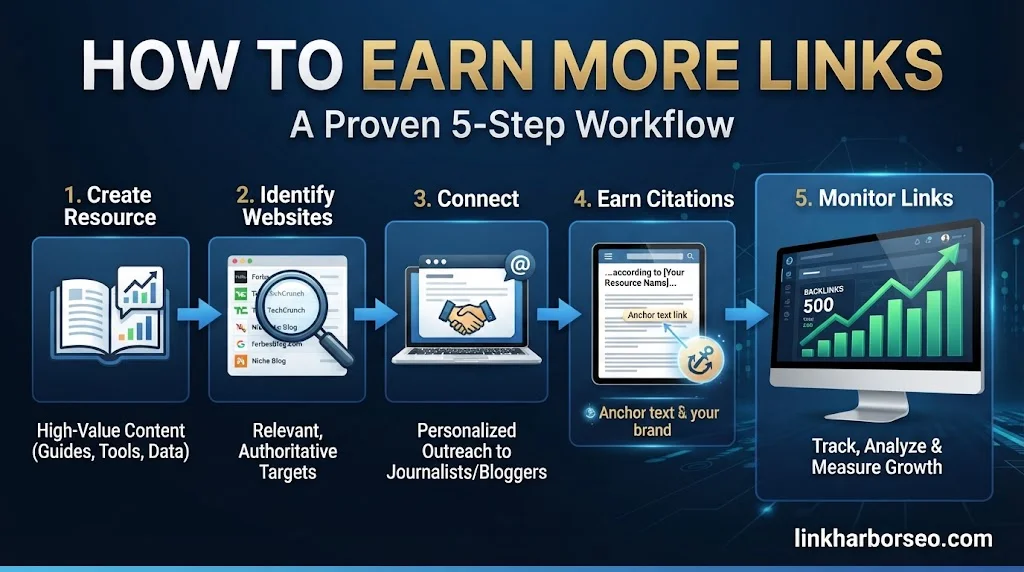
- Build one genuinely link-worthy asset first. Skip this step and nothing below will work. Pick one format from the list above and make it the best version available on the topic.
- Find realistic targets. Look at who links to similar resources already — a backlink checker or content-research tool can show you which sites and writers cover your topic and cite outside sources.
- Pitch journalists and bloggers who need sources, not links. Services like HARO (Help a Reporter Out) connect you with writers actively looking for expert input or data. Respond with a specific, usable answer, not a sales pitch — the link follows naturally if your input gets used.
- Fix unlinked brand mentions. Search for places where your brand or content is already mentioned without a link, and ask politely if they’d add one. This is the fastest win on this list because the writer already decided you were worth mentioning.
- Monitor and follow up. Track new mentions and links as they appear, and revisit older placements occasionally — sites update content, and outdated links sometimes get dropped or replaced.
One honest expectation: earning your first editorial link through outreach usually takes longer than buying a guest post placement, since you’re waiting on someone else’s editorial judgment, not a transaction.
Common Mistakes That Waste Editorial Link Opportunities
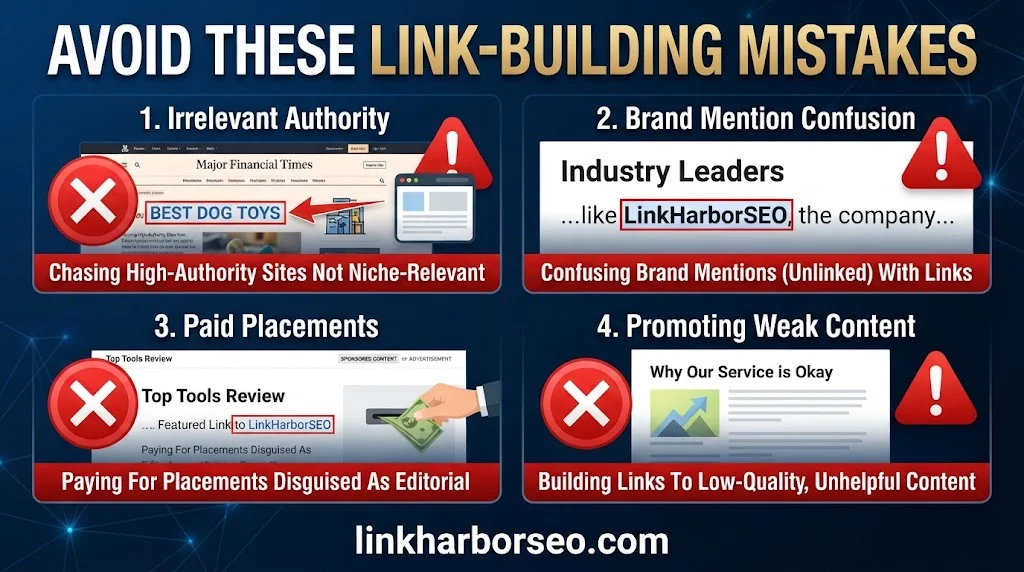
- Chasing Domain Rating (DR) or Domain Authority (DA) over relevance. A link from a high-DR site in an unrelated niche is worth less than it looks, and it can look unnatural to search engines if it happens repeatedly.
- Mistaking a mention for a link. If your brand is named but there’s no clickable link, that’s a mention, not a backlink — it’s a good opportunity to reach out and ask for one, but it doesn’t count yet.
- Paying for “editorial-style” placements. Some services sell links that are formatted to look editorial — placed inside articles, worded naturally — but if money changed hands to get it there, it’s a paid link by definition, regardless of how it reads. That doesn’t make every link-building agency dishonest, but it’s worth asking directly how a placement was secured before assuming it’s editorial.
- Pitching before the content is actually link-worthy. Outreach for a mediocre resource wastes the contact you just built. Confirm the asset is genuinely useful before you start promoting it.
FAQ
What is an example of an editorial backlink?
A common example is a journalist writing about industry trends who links to your original research or survey data as a source, without you contacting them first.
Are editorial links the same as backlinks?
No. “Backlink” is the umbrella term for any link pointing to your site. Editorial links are one specific type of backlink — the kind earned voluntarily, without being requested or paid for.
What are the three types of backlinks?
SEOs usually group backlinks into three categories: natural (editorial) links you earn without asking, manually built links you get through outreach or relationship-building (like guest posts or HARO placements), and self-created links you add yourself, such as in forum profiles or directories. Editorial links fall into the first group and are generally the most valuable of the three.
What type of links are best for SEO?
Editorial links are widely considered the best type for SEO, since they can’t be bought or arranged at scale and signal genuine third-party trust in your content. That doesn’t make other link types worthless — guest posts and outreach-built links still have a place — but editorial links carry the most weight with the least risk.
How do you get editorial backlinks?
Create genuinely useful, citable content (original data, tools, or in-depth guides), then make sure the right people can find it through targeted outreach, journalist platforms like HARO, and by fixing existing unlinked mentions.
Are backlinks still relevant in 2026?
Yes, especially editorial ones. Backlinks remain a core trust signal for Google, and because editorial links can’t be manufactured or bought at scale, they’ve stayed reliable even as spam-detection systems have gotten more advanced.
Conclusion
Editorial backlinks are links you earn, not links you request — and that’s exactly why they carry more weight than any other type. If you’re just starting out, the fastest realistic win is fixing unlinked brand mentions before investing time in outreach for new content. As a next step, pull up your current backlink profile and run each link through the four-point checklist above to see how many are actually editorial.
