


If you’re looking into a backlink company, you’re probably tired of building links yourself, or you’ve hit a wall trying to get other sites to link to yours. Either way, you want to know exactly what you’d be paying for and whether it’s actually safe for your site’s rankings.
This guide breaks down what backlink companies really do, which service models are legitimate, which tactics can get you penalized, and how to vet a provider before you sign anything.
Quick Answer
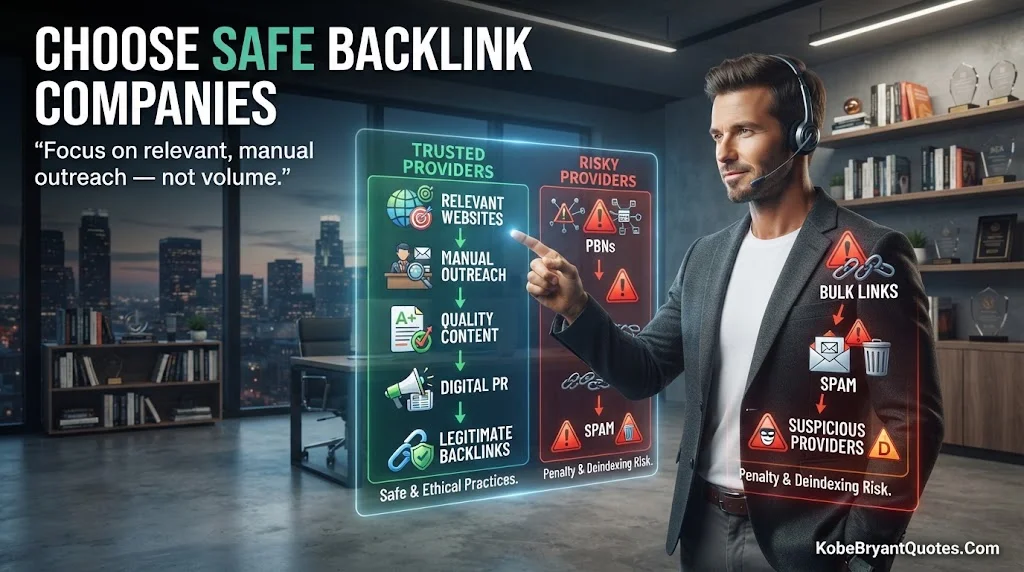
A backlink company is an agency or service that builds backlinks to your website on your behalf, usually through outreach, guest posting, digital PR, or content-based placements, with the goal of improving your search rankings. Legitimate providers focus on relevant, high-authority sites and manual outreach. Providers offering guaranteed rankings, bulk link packages, or suspiciously cheap prices are a red flag and can put your site at risk of a Google penalty.
What Is a Backlink Company?
A backlink company sells you something most site owners don’t have time for: the relationships and outreach needed to get other websites to link back to yours.
In practice, that means a backlink company (also called a link building agency or link building service) identifies relevant websites in your industry, pitches them on linking to your content, and manages the process end to end. Some run this through cold outreach, some through existing publisher relationships, and some through a mix of content creation and PR.
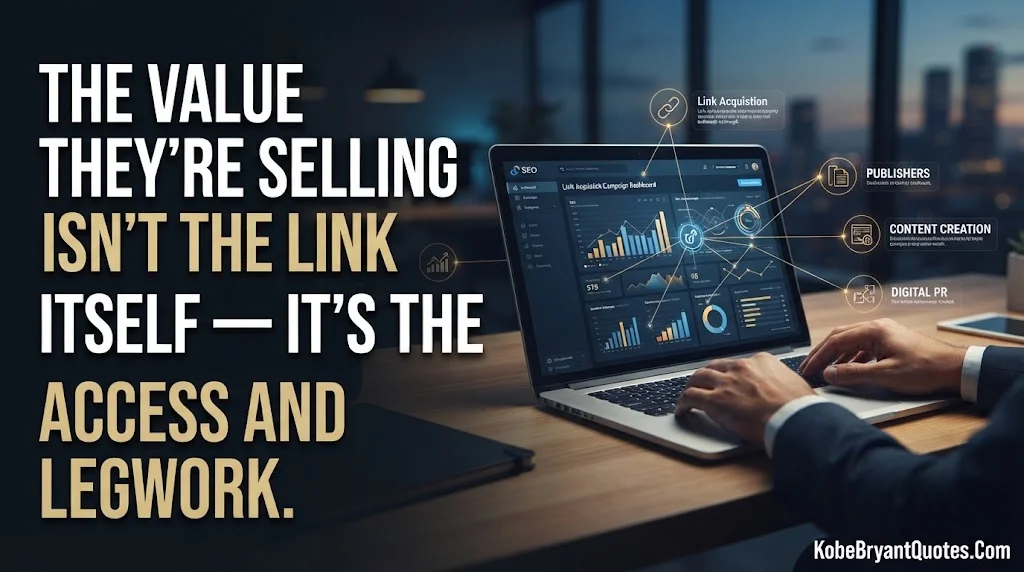
The value they’re selling isn’t the link itself — it’s the access and legwork. A single quality backlink can take hours of research and pitching to land, and that’s the part you’re paying someone else to do.
Not all backlink companies work the same way, though. Broadly, you’ll run into three types of providers:
- Full-service agencies that handle strategy, outreach, and reporting for a monthly retainer
- Freelancers or boutique outreach specialists who charge per link
- Platforms that connect you directly with journalists or bloggers looking for sources or content
The next section breaks down what each of these actually looks like.
Legitimate Backlink Company Service Models
Before you compare pricing, it helps to know what you’re actually buying. Here’s how the legitimate, white-hat service models break down.
| Service model | What it is | Typical cost | Best fit |
|---|---|---|---|
| Blogger/outreach agency | Manual pitching to relevant site owners for contextual links inside existing content | Roughly $150–$400 per link | Businesses that want ongoing, targeted links in their niche |
| Digital PR agency | Pitches your brand or original research as a news story to journalists | Monthly retainer, often $2,000–$15,000+ | Brands with a newsworthy story, data, or product |
| Content marketing agency | Produces high-value content designed to attract organic links | Monthly retainer, often starting around $1,000+ | Businesses building long-term organic link equity through content |
| Guest posting service | Places bylined articles with a link back on relevant, real websites | Flat fee, often $100–$500 per post | Businesses wanting visibility plus a link, in moderation |
| Expert-source platforms (HARO-style) | Connects you with journalists who need quotes or data for stories | Free to roughly $200/month | Businesses with in-house expertise willing to respond quickly to media requests |
A few things worth knowing about each model:
- Outreach and guest posting give you the most control over anchor text and destination page, but they’re slower and depend heavily on the quality of the outreach.
- Digital PR can land you links from major publications, but there’s no guarantee a mention actually includes a link — some coverage is “unlinked.”
- Content marketing builds links passively over time, but it needs genuinely good content to work; it won’t produce links on its own.
- Expert-source platforms are cheap or free, but most links point to your homepage rather than a specific service or blog page.
None of these models involve buying links in bulk, and none of them can promise a specific number of links per month without some quality trade-off. If a provider promises otherwise, move to the next section.
Backlink Tactics and Providers to Avoid
Some backlink companies still sell tactics that Google has explicitly targeted for over a decade. If a provider leans on any of the following, that’s a reason to walk away.
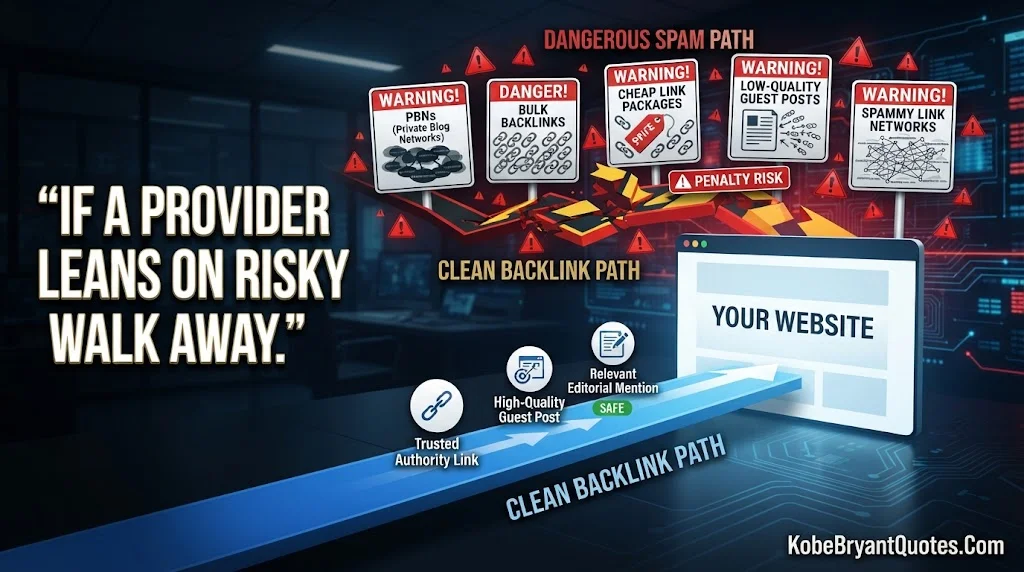
- Private blog networks (PBNs): Networks of sites built solely to link out. Google actively hunts and deindexes these networks, which makes any links from them a liability rather than an asset.
- Bulk or “push-button” link packages: Blog comments, web directories, and article-directory links sold in bulk. These patterns are easy for Google’s spam systems to detect and typically carry no ranking value.
- Cheap gig-marketplace links: Extremely low-cost link packages from freelance marketplaces are almost always a repackaged version of the tactics above.
- Paid guest posts on low-quality sites: Not all guest posting is bad, but paying purely for the placement itself (rather than for the writing and outreach effort) on a site that exists only to sell links crosses into what Google classifies as a link scheme.
- Spammy press-release distribution: Most press release links today are nofollowed, and Google has stated it largely disregards links placed purely through mass press-release distribution.
Google has repeatedly confirmed, including in its Quality Rater Guidelines and core update documentation, that links remain a foundational ranking signal, and a Google search quality strategist publicly named links as one of the top three ranking factors back in 2016. What’s changed since then is Google’s ability to detect unnatural link patterns, devalue topically irrelevant links, and identify links purchased from link farms or PBNs. In other words: the tactics above haven’t quietly stopped working because Google loosened up — they’ve become easier for Google to catch.
For the full, official list of what counts as a manipulative link scheme, Google’s own Link spam policies page is the most reliable reference.
How to Vet a Backlink Company Before You Hire One
Before you sign anything, run the provider through this checklist:
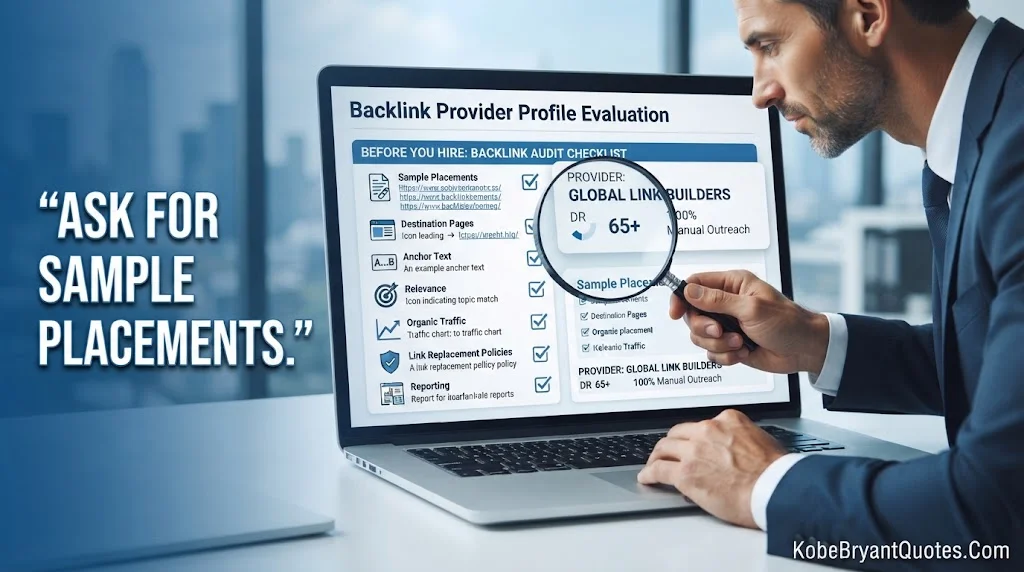
- Ask for sample placements. A legitimate provider should be able to show you real, recent examples of links they’ve built for other clients — including the target sites, not just screenshots of dashboards.
- Ask where links will point. You should have some say in destination pages and anchor text. If they refuse to discuss this, that’s a control problem waiting to happen.
- Ask about their vetting criteria for sites. A good answer mentions relevance and real organic traffic, not just a Domain Rating (DR) or Domain Authority (DA) number. Keep in mind DR and DA aren’t Google metrics — they’re third-party scores from tools like Ahrefs and Moz, used as a rough proxy for site strength. A high DR with no real traffic is a common red flag for PBN-adjacent sites.
- Ask what happens if a link gets removed. Legitimate agencies expect some natural link decay and should have a replacement or reporting policy.
- Ask how they report results. You should get visibility into what was published and where — not just a monthly invoice.
Watch for these red flags in the sales conversation itself:
- Guaranteed rankings or a guaranteed number of links per month
- Pricing based purely on volume (“100 links for $X”)
- Reluctance to name or show any example placements
- Heavy emphasis on DR/DA numbers with no mention of relevance or traffic
How Much Does a Backlink Company Cost?
Pricing depends heavily on the service model and the authority of the sites involved, but the table in the service models section above gives you a realistic starting range for each approach.
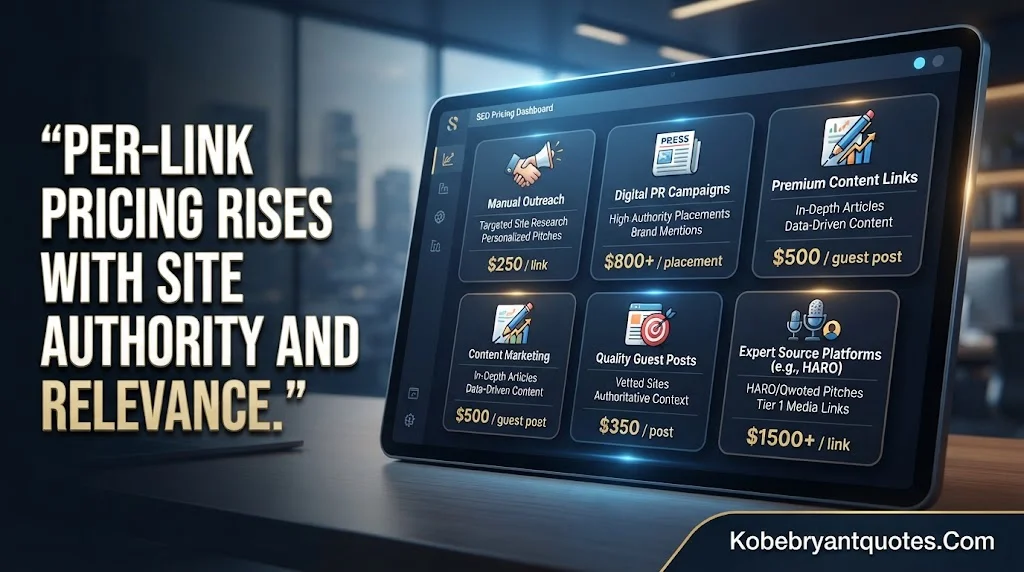
A few general patterns worth knowing:
- Per-link pricing rises with site authority and relevance. A link from a well-trafficked, niche-relevant site will cost more than one from a general-interest blog.
- Retainer-based models (PR, content marketing) are priced on effort, not per link. You’re paying for ongoing work, and link output can vary month to month.
- Anything priced far below these ranges is worth a closer look — very cheap link packages are the clearest sign of the bulk or PBN tactics covered above.
Do Backlinks Still Matter in 2026?
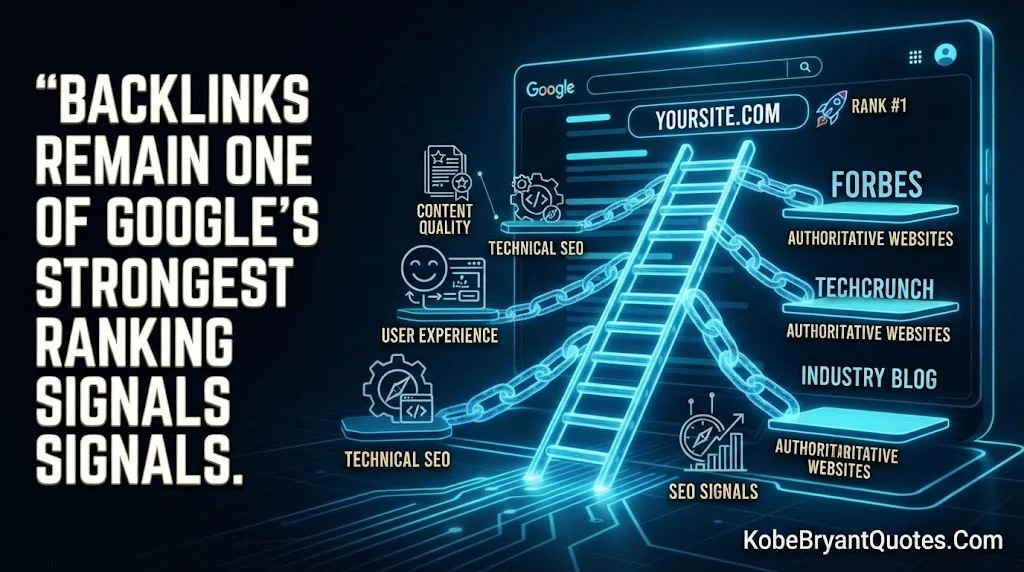
Yes. Backlinks remain one of Google’s strongest ranking signals heading into 2026, and Google’s March 2026 core update continued to reward pages with high-quality inbound links — though, as with earlier updates, the bar for what counts as a “quality” link keeps rising, and Google’s automated spam detection systems now flag suspicious link patterns in near real time.
What’s changed isn’t whether links matter — it’s how forgiving Google is toward manipulative link building. Backlinks work in conjunction with other ranking factors like content quality, technical SEO, and user experience signals rather than as a standalone lever, so a strong backlink profile helps most when the rest of your site’s SEO fundamentals are already in place.
FAQ
Which backlink provider is the best?
There’s no single “best” backlink company for every business — the right fit depends on your budget, niche, and how hands-on you want to be. Instead of chasing a “best” label, run any provider you’re considering through the vetting checklist above. A provider that welcomes those questions is a far better signal than any ranking or review score.
What are three types of backlinks?
The three main categories are editorial links (earned naturally because someone found your content valuable), manually built links (secured through outreach, guest posting, or PR), and self-created links (links you add yourself, like directory listings or forum profiles, which generally carry little to no SEO value on their own).
How long does it take to see results from a backlink company?
Most legitimate providers take a few weeks just to research, pitch, and secure the first placements — outreach and PR take time to land. After that, it typically takes a few months of consistent, relevant link building before you see a measurable ranking shift, since Google needs time to crawl, index, and factor in new links alongside your site’s other SEO signals. Be cautious of anyone promising fast rankings; that’s usually a sign they’re using the riskier tactics covered above.
Conclusion
A backlink company is only worth hiring if it’s doing manual, relevant outreach — not selling volume. If you’re just getting started, focus first on the vetting checklist above rather than comparing prices, since a cheap provider using risky tactics can cost you far more in the long run. Before you pay anyone, ask for real sample placements and check them yourself.

2 comments on “Backlink Companies Explained: What They Do and How to Pick a Safe One”