


You can start a blog for free today. The best free blogging platforms let you publish in minutes, with no hosting bill and no code.
But free comes with rules. Some platforms show ads, some lock your web address, and some limit how you earn. This guide shows the real limits of each free blogging platform, so you can pick once and grow with confidence.
Last checked: September 2026. Plans change often, so confirm limits on each pricing page.
Why Start With Free Blogging Platforms in 2026?
A free platform lets you test your idea before you spend a cent. The trade-off is less control over design, ads, and SEO.

What is a free blogging platform?
It is a service that hosts your blog and gives you a simple editor at no cost. Most give you a subdomain, like yourname.platform.com.
Free platforms are great for three things: learning content creation, testing a niche, and building a first audience.
Most free blog sites limit the same three things: your custom domain, your ads, and your SEO control. For example, the WordPress.com free plan gives you 1 GB of storage and a WordPress.com subdomain, and it shows ads on your site. costbench
Is free software the same as free hosting?
No. Self-hosted WordPress is free to download, but you still pay for hosting and a domain. It is also hugely popular: W3Techs reports WordPress runs 41.5% of all websites (July 2026). You can see the data on W3Techs.
Who owns your blog on a free platform?
You own your words, but the platform sets the rules. It can change fees, features, or policies. Wix shows the risk well. Its builder is proprietary, so moving your content to another host is difficult. Keep a backup of your posts and your email list.
Can you make money with a free blog?
Yes, but the rules vary by platform. If you use affiliate links or sponsored posts, the FTC says you must clearly disclose them. Blog income is also taxable in the US, so review the IRS self-employed guidance or ask a tax professional.
Read More: Contextual Backlinks: What They Are and How to Build Them
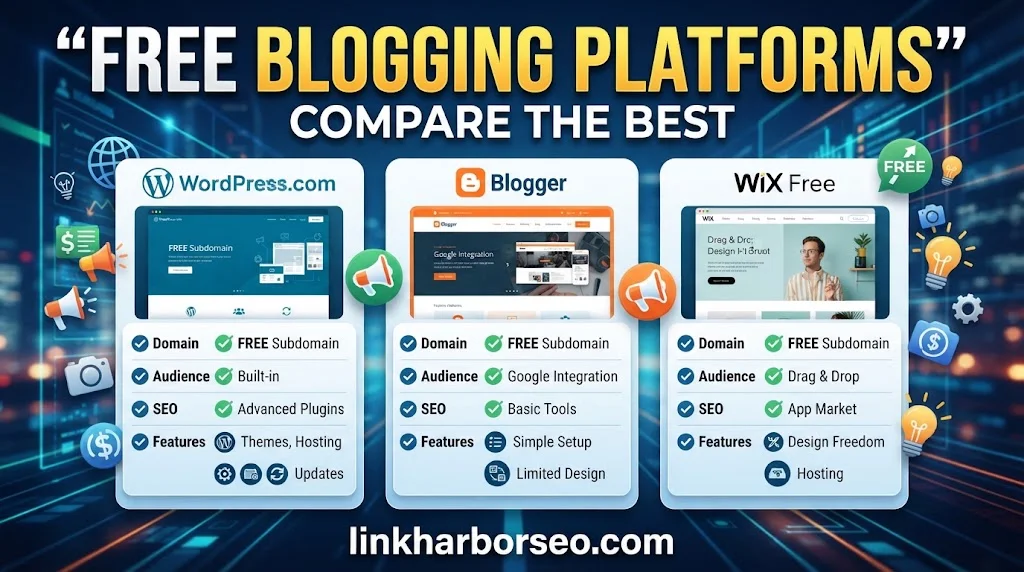
Best Free Blogging Sites Compared at a Glance
This table shows the key limits side by side. Use it to shrink your list fast.
| Platform | Best for | Built-in audience | Custom domain on free plan |
|---|---|---|---|
| WordPress.com | All-round beginners | Some | No |
| Wix | Design-focused blogs | No | No |
| Medium | Writers who want readers | Yes | Paid only |
| Substack | Newsletter blogs | Yes | One-time fee |
| Blogger | Hobby blogs | No | Yes (you buy the domain) |
| Tumblr | Creative, visual blogs | Yes | Yes |
| beehiiv | Growth-minded newsletters | Some | Yes |
| Ghost | Tech-savvy writers | No | Yes (self-hosted) |
| Hashnode | Developer blogs | Yes | Check current plan |
| DEV Community | Tech writers | Yes | No |
| Professionals and B2B | Yes | No | |
| Notion | Simple notes-to-blog | No | Paid only |
| GitHub Pages | Developers who want control | No | Yes |
| Weebly | Short-term tests | No | No |
| Bear Blog | Minimalist writers | Some | Paid upgrade |
Quick picks:
- Best overall for beginners: WordPress.com
- Best for a built-in audience: Medium
- Best for newsletters: Substack or beehiiv
- Best for developers: Hashnode, DEV Community, or GitHub Pages
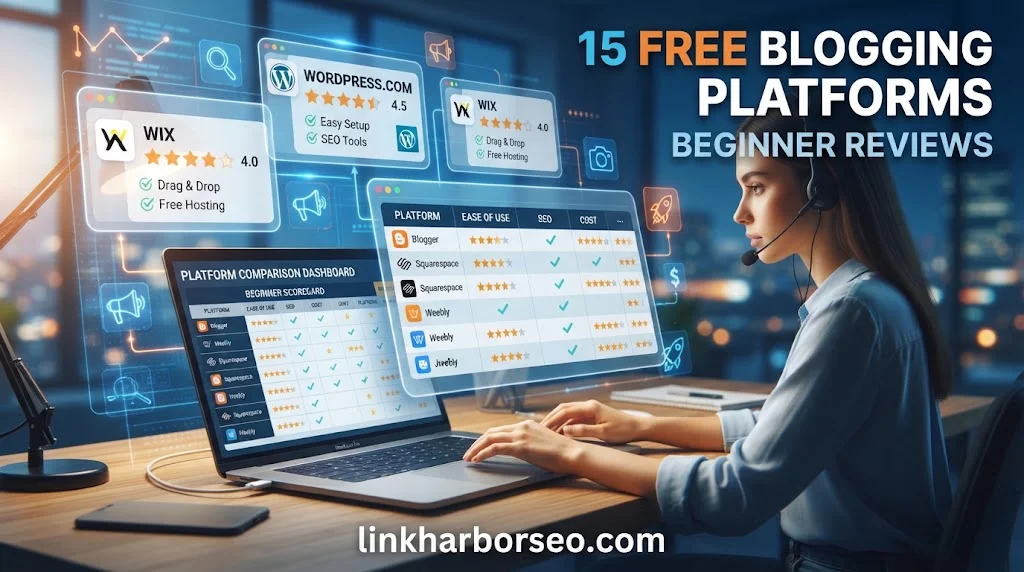
Best Free Blogging Platforms Reviewed for Beginners
Each review shows who the platform suits, what you get for free, and where the limits start.
The easiest way into the WordPress world. On the free plan, you get 1 GB of storage, and you cannot install plugins. Paid plans start at $9 a month with the Personal plan. Do not confuse it with WordPress.org, which is the self-hosted software.
Best for: beginners who may upgrade later. Watch out: ads and no custom domain.
Wix
A drag-and-drop editor that gets a blog live fast. The free plan includes 500 MB of storage and 1 GB of monthly bandwidth, and you cannot remove Wix branding.
Best for: visual bloggers and portfolios. Watch out: hard to move your site later.
Medium
You write, and Medium shows your posts to its readers. Its Partner Program pays writers based on how long paying members read their paywalled stories. To join, you need a published story and a home in an eligible country. Read the official enrollment guide.
Best for: writers who want a built-in audience. Watch out: no design control, and Medium sets the rules. mediummedium
Substack
A blog and an email newsletter in one. It is free to start. Substack keeps 10% of your paid subscription revenue, and a custom domain costs a one-time $50.
Best for: newsletter-first writers. Watch out: very little design choice. devopscube
Blogger
Google’s long-running platform. It is free, simple, and works with Google tools like AdSense and Analytics. You can also use a custom domain you buy elsewhere.
Best for: hobby bloggers. Watch out: dated templates and slow feature updates.
Tumblr
A social blogging site that shines for art, photos, and short posts. It is free and supports custom domains.
Best for: creative and visual bloggers. Watch out: weaker for long, search-focused articles.
beehiiv
A newsletter platform with a generous free tier. The free Launch plan covers up to 2,500 subscribers, a custom domain, and unlimited sends. Paid subscriptions need a paid plan, but beehiiv takes 0% of subscription revenue beyond payment processing fees.
Best for: growth-minded newsletter writers. Watch out: a big price jump after the free tier. beehiivtechradar
Ghost
An open-source publishing platform with a clean editor and built-in memberships. The software is free to self-host, but you need a server and some setup skills. Ghost(Pro) is the paid, managed version.
Best for: tech-comfortable writers. Watch out: setup takes work.
Hashnode
A blogging platform for developers, with Markdown support and a community feed. As of mid-2026, custom domains and some other features are no longer automatically free. Check its pricing page before you commit.
Best for: developers. Watch out: plan limits have changed recently. poster
DEV Community
A free, open-source community for programmers. New posts can reach readers quickly.
Best for: tech writers and learners. Watch out: you build the DEV brand more than your own.
LinkedIn
Articles and newsletters live under your profile. They suit career, business, and B2B topics.
Best for: professionals building authority. Watch out: reach depends on your network and the algorithm.
Notion
You can publish any page to the web and turn it into a basic blog. It is a low-effort option for note-takers.
Best for: simple, personal blogs. Watch out: limited SEO features, and custom domains usually cost extra.
GitHub Pages
Free static site hosting from GitHub. Pair it with Jekyll or Astro for a fast, clean blog with a custom domain.
Best for: developers who know Git and Markdown. Watch out: no visual editor.
Weebly
Weebly is Square’s older site builder. In June 2026, Square announced it would wind down Weebly in 67 countries. US sites are not affected, but Square now tells new users to build on Square Online. The free plan shows a Square ad and blocks custom domains.
Best for: a short-term test. Watch out: not a safe long-term home. Weebly and Square in 2026: What’s Happening to Weebly? +3
Bear Blog
A minimalist, fast, ad-free blog for pure writing. It has few features, and a custom domain may need a paid upgrade.
Best for: writers who love simplicity. Watch out: basic tools only.
Reddit, X, and Threads are not blogging platforms. Use them to promote your posts instead.
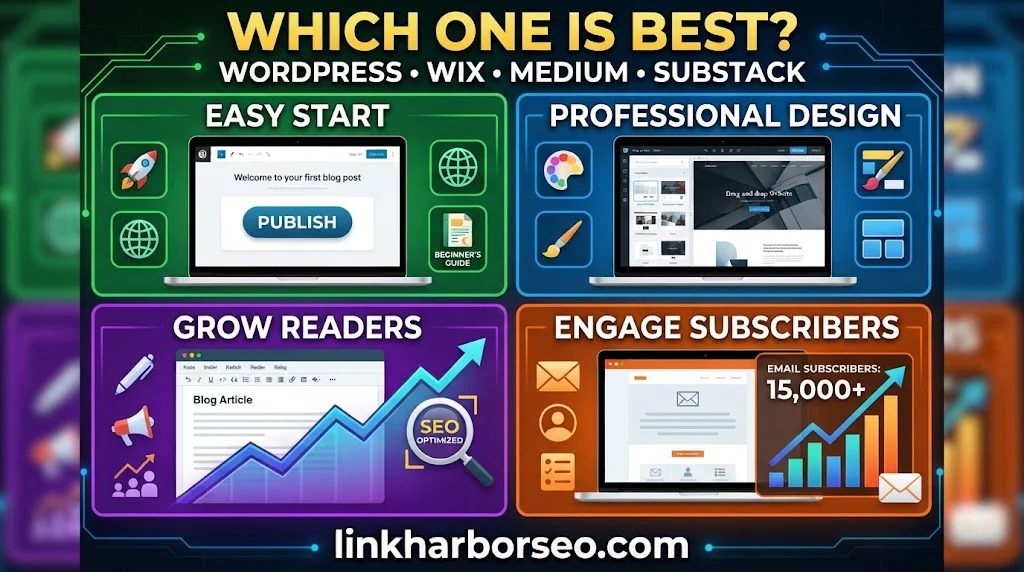
How to Choose the Best Free Platform to Start a Blog
Pick the platform that fits your goal, not the one with the most features. A clear goal saves you from a painful move later.

Which free blogging platform fits your goal?
- Hobby blog: Blogger, WordPress.com, or Bear Blog.
- Freelance writing portfolio: WordPress.com or Medium.
- Small business blog: start on WordPress.com, then plan a move to self-hosted WordPress for plugins and full SEO control.
- Newsletter: Substack for simplicity, beehiiv for growth tools.
- Developer blog: Hashnode, DEV Community, or GitHub Pages.
- Earning money: Medium’s Partner Program, Substack paid tiers, or later, a self-hosted blog with affiliate marketing.
What should you check before you sign up?
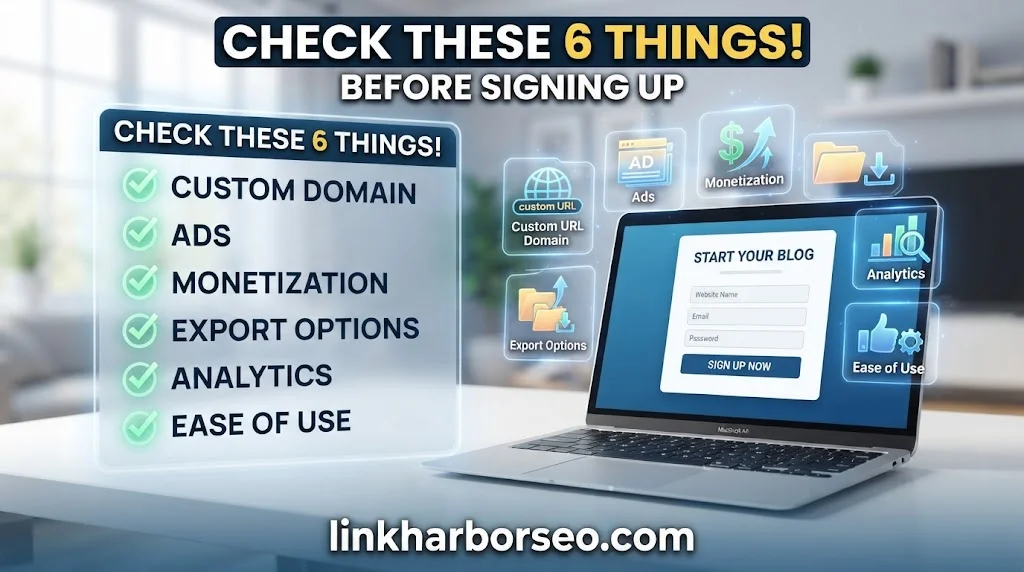
- Ease of use
- Custom domain rules
- Ads on the free plan
- Monetization rules
- Export options for your posts
- Mobile app and analytics
When should you move from free to paid? Upgrade when you want your own domain, no ads, plugins, or full SEO control. On WordPress.com, that starts at $9 a month. Self-hosting adds hosting and domain costs, but it gives you complete ownership.
What mistakes should you avoid?
- Switching platforms every few months
- Ignoring content export
- Spending weeks on design before you publish
Search engines and AI answer tools tend to reward clear, original, experience-based writing. So publish real advice, and keep your best work on a domain you own.
FAQs
These are the questions new bloggers ask most.
What is the easiest free blog platform to use?
Medium and Substack are the easiest if you only want to write. You sign up and publish in minutes. WordPress.com and Wix take a little longer but give you a full blog with themes and pages. For most beginners, WordPress.com offers the best mix of ease and growth.
What is replacing blogging?
Nothing fully replaces it. Blogging is spreading into email newsletters, video, podcasts, and social posts. Many creators now pair a blog with an email list. Blog posts still work well for search and AI answers because they hold detailed, original information.
What is a ghost blog?
The term has two meanings. It can mean a blog built on Ghost, an open-source publishing platform with built-in memberships and newsletters. It can also mean a blog written by a ghostwriter, where the writer stays unnamed and the client gets the credit.
What is the 80/20 rule for blogging?
The 80/20 rule, or Pareto principle, says about 80% of results come from 20% of efforts. In blogging, a small set of posts usually drives most traffic. Spend more time on research, promotion, and updating those top posts.
Conclusion
The best free blogging platforms help you start today and learn fast. WordPress.com suits most beginners. Medium and Substack suit writers who want readers and email subscribers. Hashnode, DEV Community, and GitHub Pages suit developers.
Choose one platform, publish your first post this week, and keep a backup of your work. When your blog grows, move to your own domain for full control.

1 comment on “15 Best Free Blogging Platforms to Start Your Blog in 2026”